
 1
1Photo ready
Name or photograph the item
Designed for the moment you are standing beside the bin.
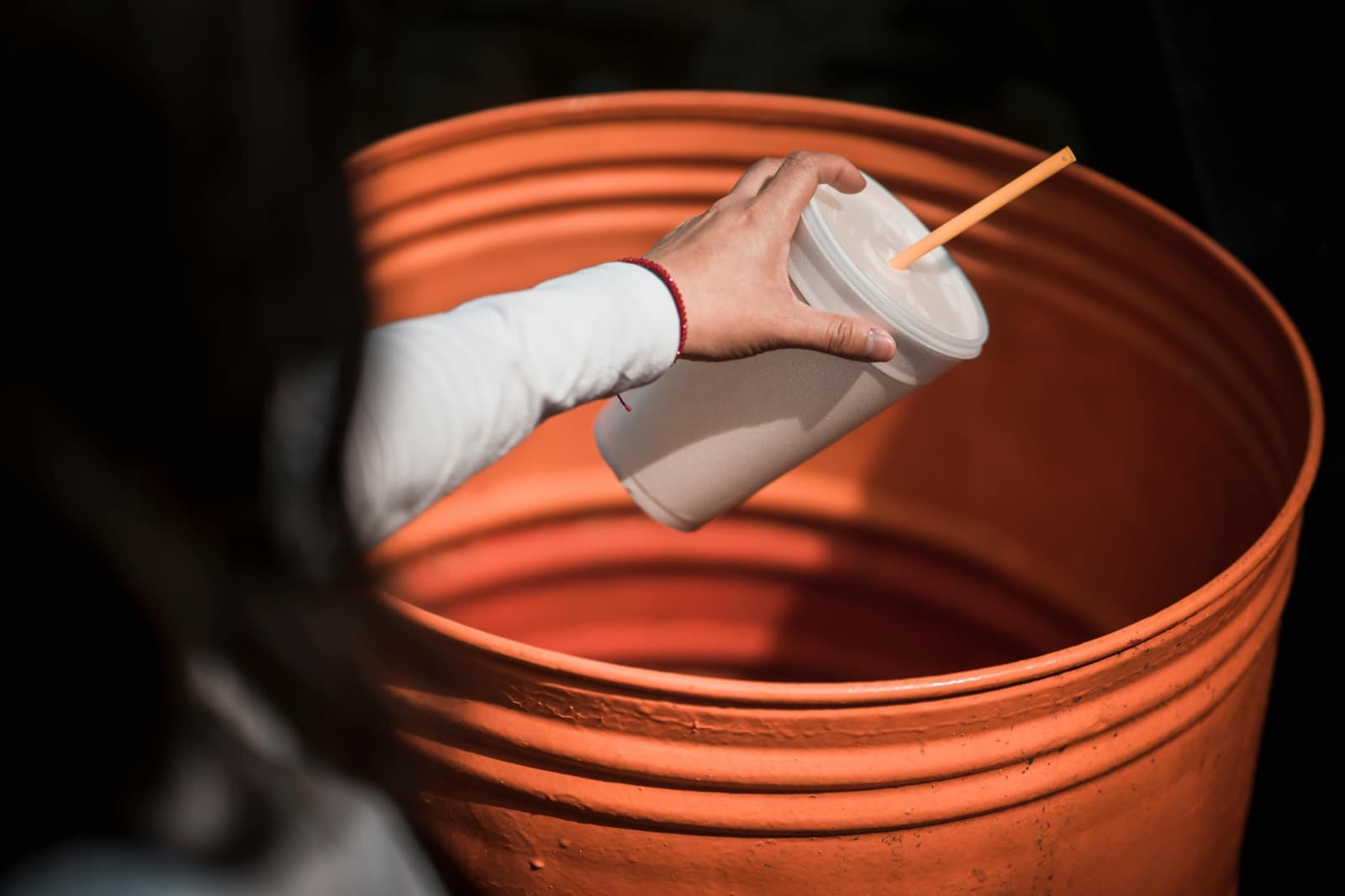
Type the item or use a photo for a quick trash or recycling lookup. Get a practical answer for chip bags, batteries, frozen food boxes, compost scraps, and other items with caveats that actually matter.
Household lookup
How it works
1Designed for the moment you are standing beside the bin.
 2
2Recycle the clean top.
The result leads with action, then adds why and watch-outs.
 3
3Batteries, cords, bulbs, and paint can wait without becoming clutter.
Possible premium helpers
Deal with later
Some items need a drop-off day, a hardware-store errand, or one more local check. Keep them visible without turning disposal into a task manager.
Possible premium helpers
Save batteries, cords, bulbs, paint, or anything else that needs a later errand.

iPhone app now available
The native iPhone app gives you quick household disposal guidance for recycling, trash, compost, donation, e-waste, hazardous drop-off, and local-rule checks. It is intentionally small, fast, and focused on the moment you are standing near the bin.
Popular household questions
Built for practical uncertainty: food residue, mixed materials, dangerous items, and local-rule edges.
Usually the clean top. Greasy cardboard should be composted or trashed.
Read guideOften trash unless your local program accepts coated paperboard.
Read guideSave them for hazardous drop-off or a retail collection box.
Most shiny snack bags are trash, not curbside recycling.
Read guideMost broken household glass belongs wrapped in trash, not curbside bins.
Working chargers can be donated. Broken ones belong with e-waste.
Latest guides
Household guide
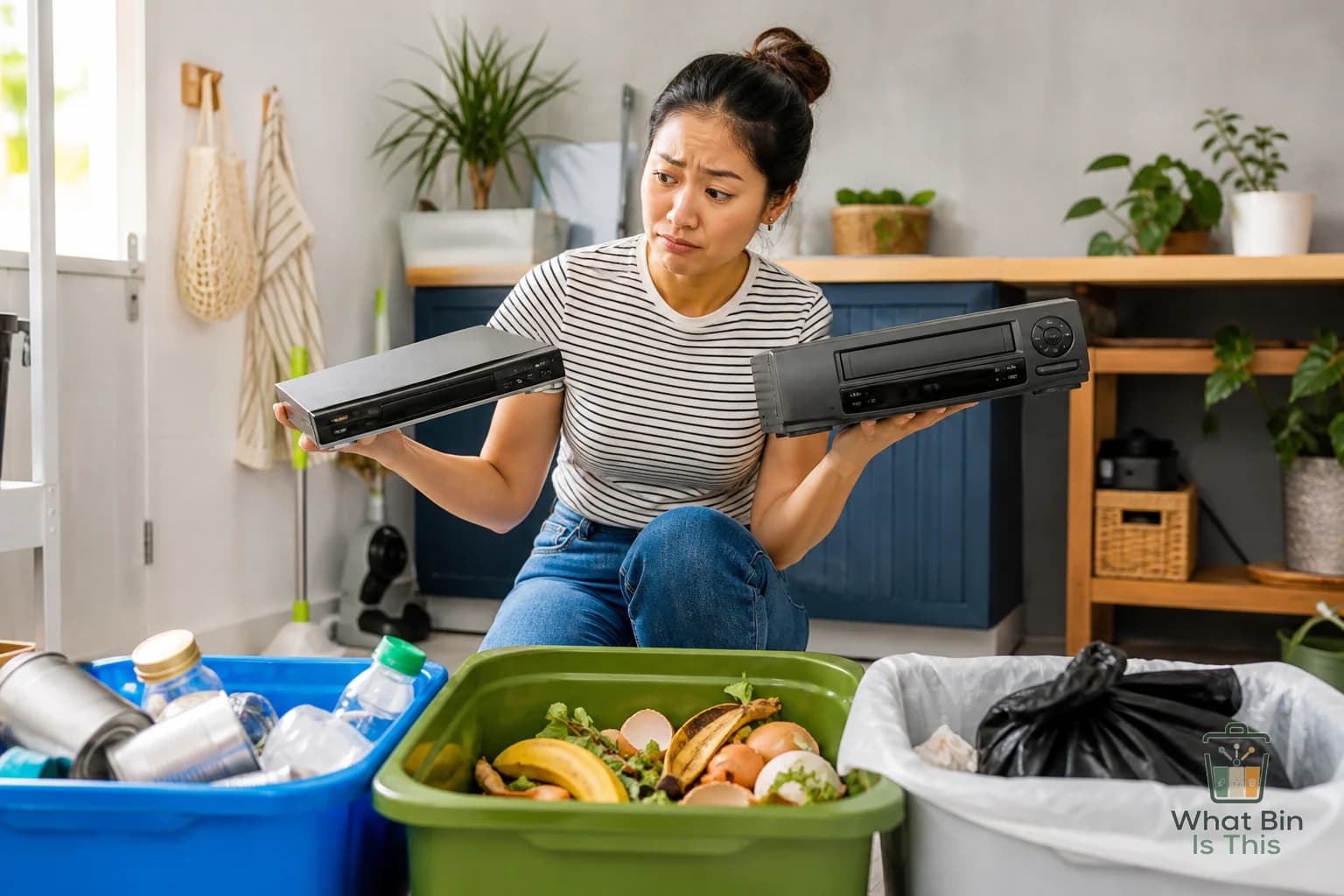
Old DVD players and VCRs usually do not belong in curbside recycling. Use e-waste drop off, donation, repair, or local bulky trash rules.
Read guide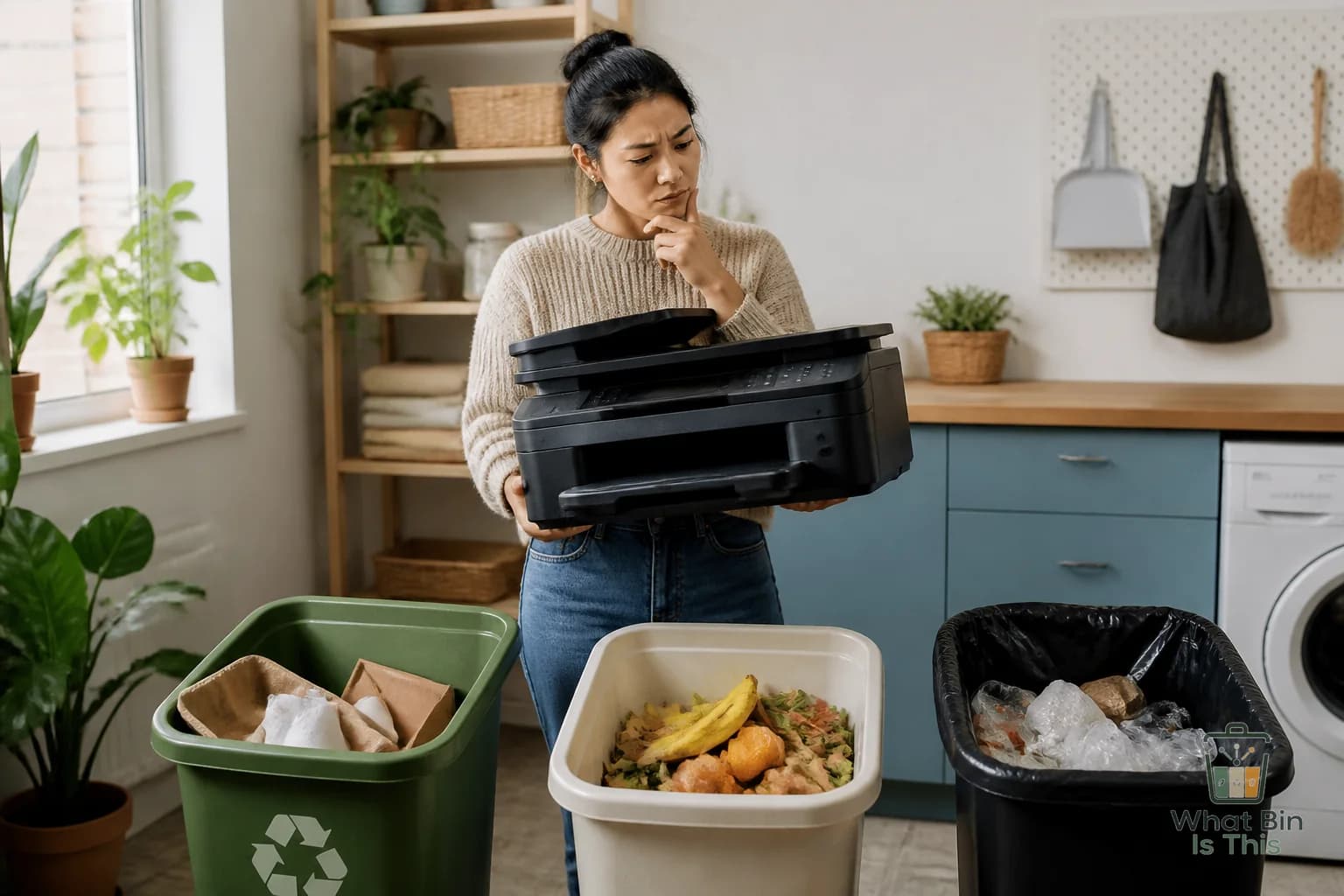
Household guide
Old printers usually do not belong in the curbside recycling bin. Use e-waste drop off, retailer takeback, or local bulky waste rules.
Read guide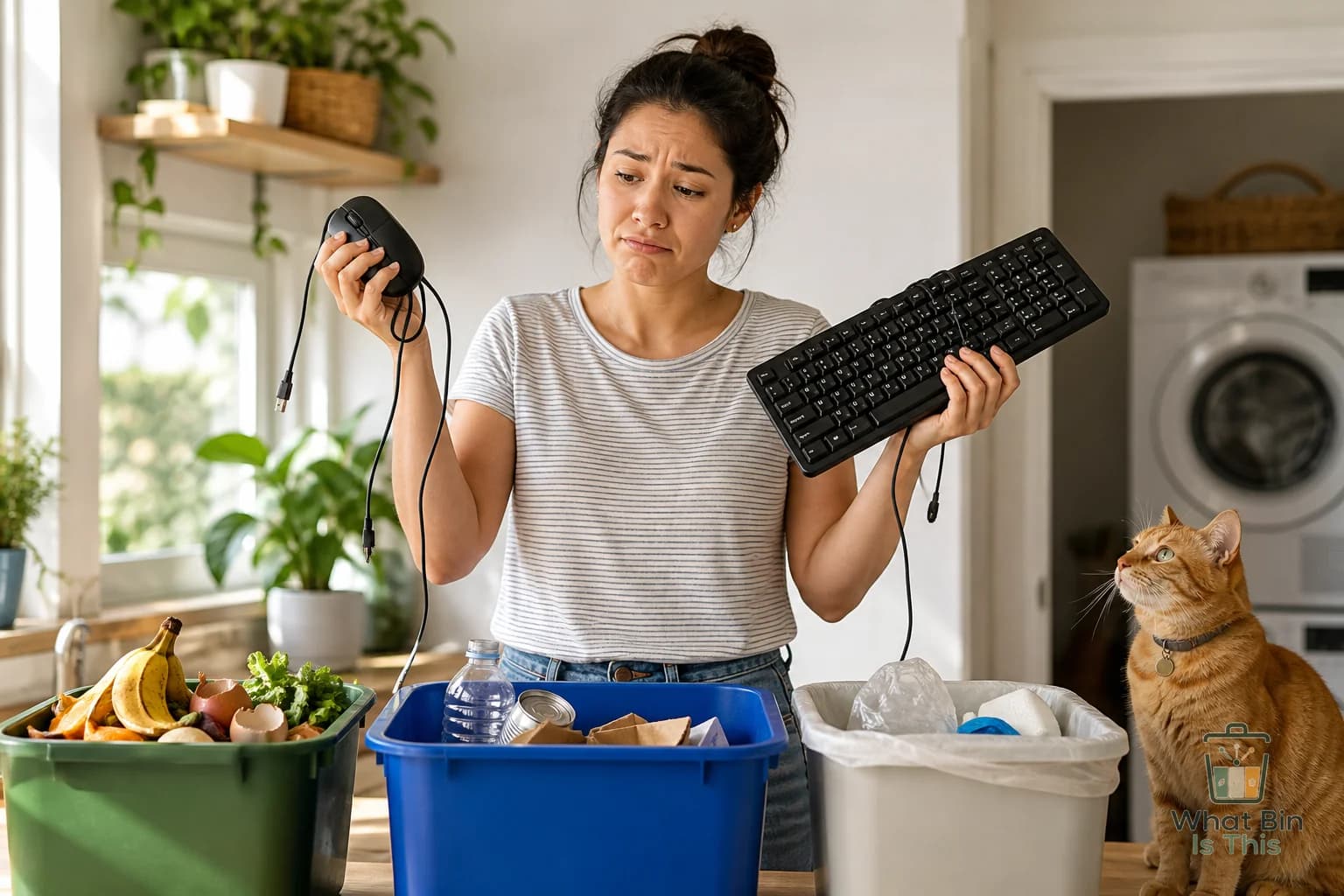
Household guide
Old keyboards and computer mice usually do not belong in curbside recycling. Remove batteries, use e-waste drop off if available, and check local rules.
Read guide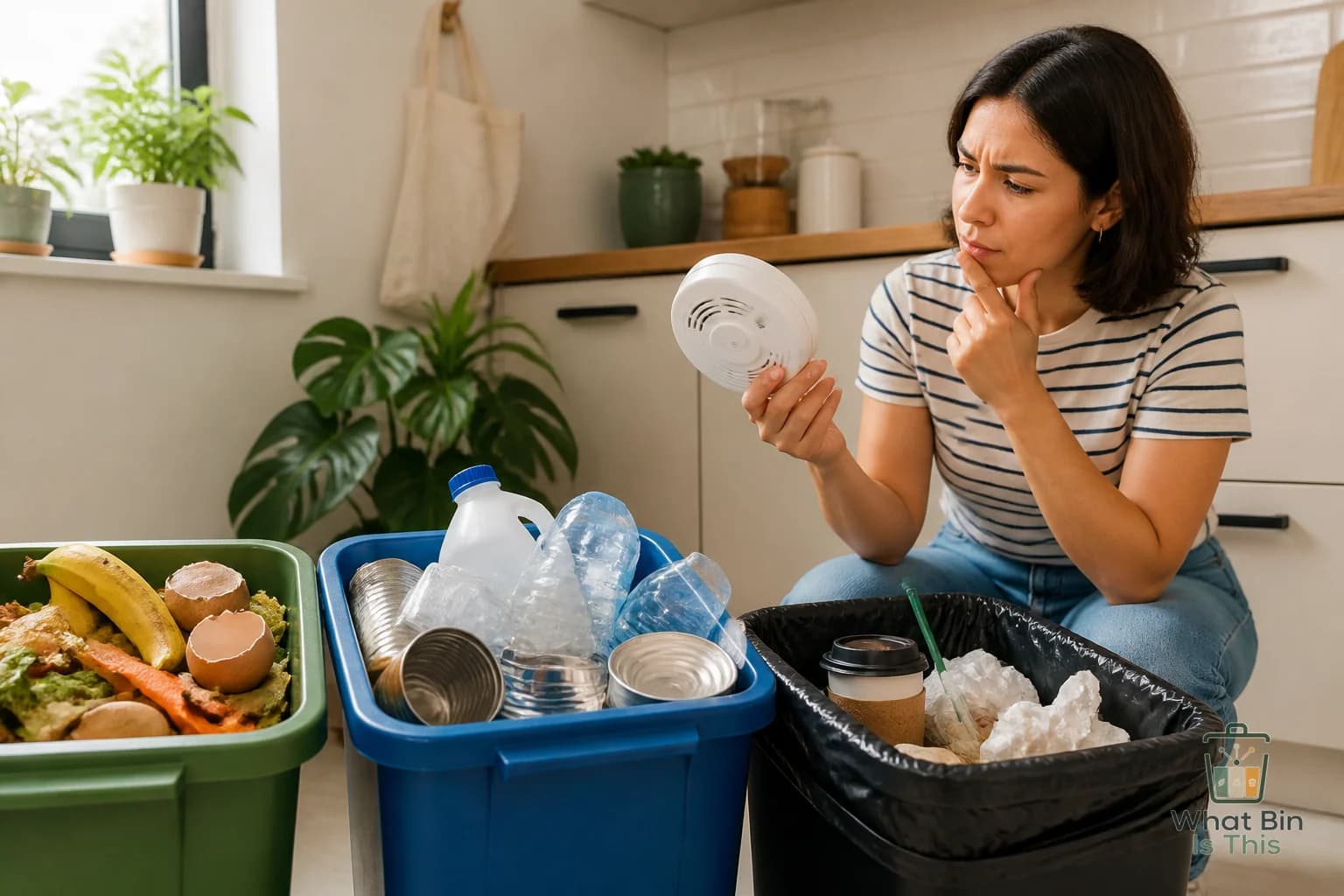
Household guide
Smoke detectors usually do not belong in curbside recycling. Remove the battery and check local drop-off, manufacturer, or trash rules.
Read guide
Free PDF guide
Learn a simple sorting method for confusing household items and know what to check locally before tossing.
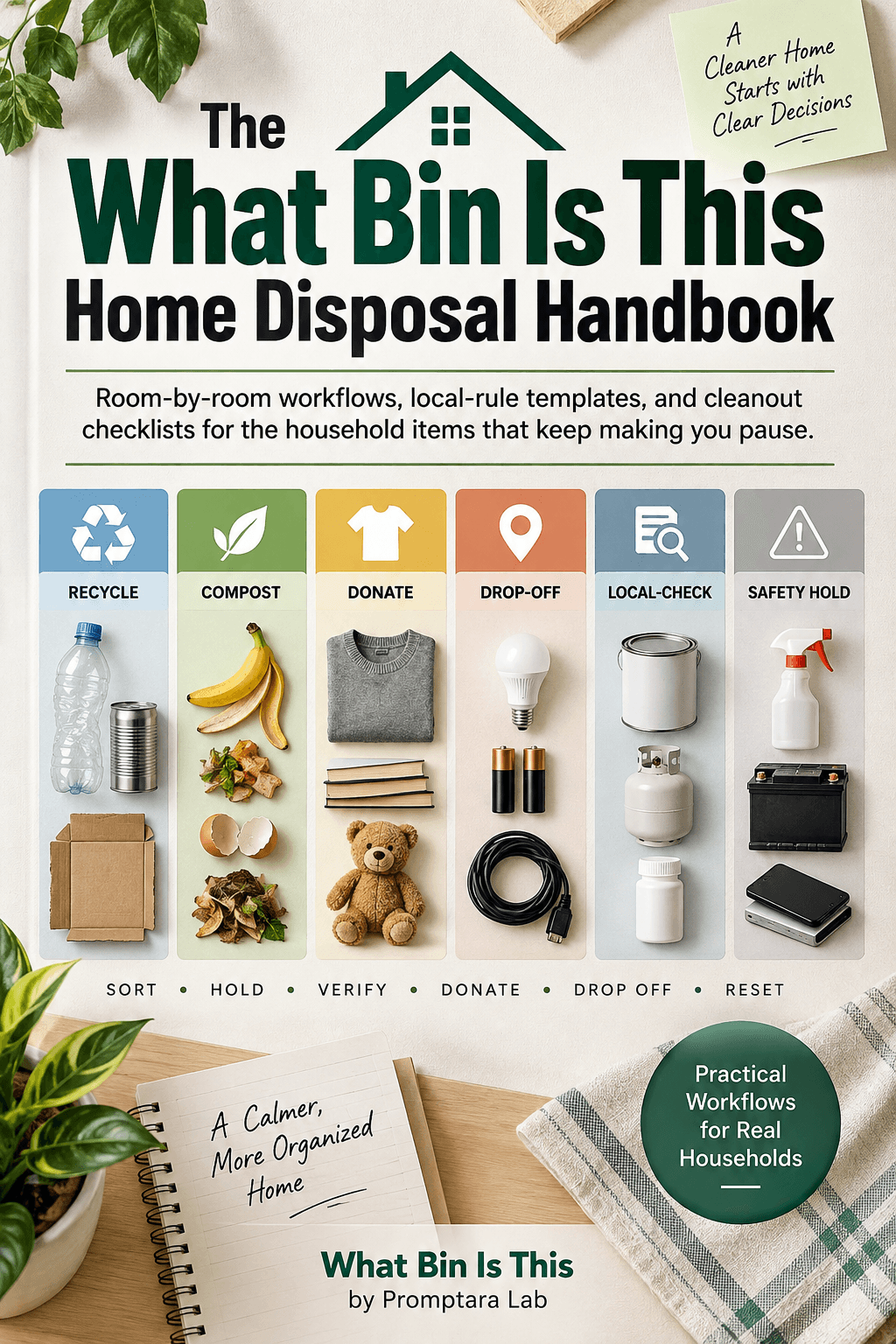
Premium ebook
A premium eBook/workbook for building a repeatable household disposal system across recycling, compost, donation, e-waste, hazardous drop-off, and local-rule checks.
Launch pricing available on Gumroad. Local disposal rules still vary; the handbook helps you build a system and check the right source.
FAQ
Quick notes on how What Bin Is This handles local rules, photos, and the items that need extra care.
No. The app gives practical household guidance first, then flags the items where local recycling, compost, or hazardous-waste rules are likely to change the final answer.
Yes. What Bin Is This is designed for quick item lookups by name or photo, especially when packaging, residue, or mixed materials make the choice less obvious.
Items like batteries, paint, bulbs, propane tanks, and some electronics get extra caution. The guidance will usually point you toward drop-off, retail collection, or local hazardous-waste instructions.
No. It is meant to reduce hesitation and help you understand the likely bin. For final instructions, especially for local programs, your municipal guide is still the source of truth.
Honest by design
What Bin Is This gives general household guidance first, then names the places where local rules matter. It is made to reduce hesitation, not replace your municipal program.
Low-confidence answers are intentionally quiet and direct users toward local verification.
Hazardous, e-waste, and mixed-material items receive extra caution so the answer stays useful in the real world.
Stay in the loop
Product updates only. No household guilt. No weekly lecture.