
July 14, 2026
Can you recycle pizza boxes?
Pizza boxes can be recycled only when the cardboard is clean enough. Here is what to do with greasy bottoms, cheese, liners, and leftover slices.
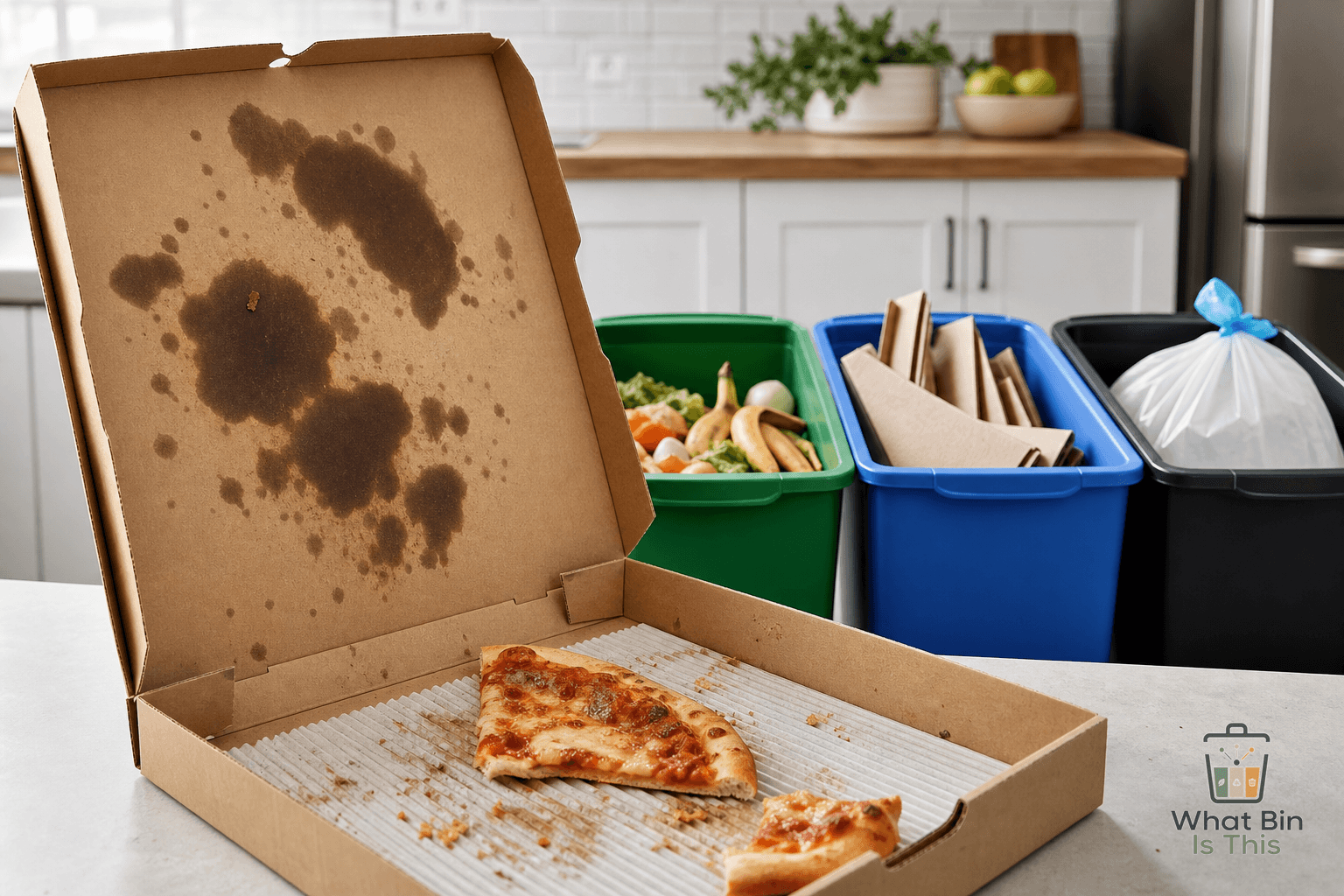
A pizza box feels like it should be easy. It is cardboard. Cardboard is recyclable. Case closed, right?
Not quite. Pizza boxes sit in the awkward middle zone between recyclable packaging and food-soaked trash. The right answer usually depends on how greasy the box is, whether food is stuck to it, and what your local recycling or compost program accepts.
If you are sorting freezer packaging too, remember that frozen food boxes can have coatings that make them different from ordinary cardboard. See Can you recycle frozen food boxes? for that separate rule.
Direct answer
You can usually recycle the clean parts of a pizza box.
If the top of the box is clean and dry, tear it off and put that part in recycling. If the bottom is heavily greasy, has melted cheese stuck to it, or has sauce and crumbs ground into it, that part usually belongs in the trash unless your local compost program specifically accepts greasy cardboard.
The simple rule:
- Clean cardboard: recycle
- Light grease: often accepted, but check locally
- Heavy grease, cheese, sauce, or stuck-on food: trash or approved compost
- Leftover pizza: food waste, compost if accepted, otherwise trash
- Plastic liners, dipping cups, and little sauce packets: usually trash unless clearly accepted locally
If you want a broader cardboard guide, see Clean cardboard vs. greasy cardboard: what goes in recycling?.
Why the answer is not obvious
Pizza boxes confuse people because the material and the mess tell two different stories.
The box itself is usually corrugated cardboard, which is one of the more commonly accepted curbside recycling materials. But recycling systems are designed to handle paper and cardboard fibers, not slices of pepperoni, puddles of oil, garlic sauce, or fused-on mozzarella.
A small amount of staining may not ruin the whole thing. Many programs care more about actual food residue than a faint grease shadow. The problem is that households do not get a tiny recycling lab next to the sink. You get a box, a bin, and maybe someone asking, "Are we keeping this?" even though it clearly contains one cold crust and regret.
That is why the tear-off method works well. Separate the clean cardboard from the messy cardboard. You do not have to make the whole box one decision.
Common mistakes
The most common mistake is putting the whole pizza box in recycling because it is technically cardboard. If the bottom is soaked with grease or covered in cheese, it can be a problem for some recycling programs.
Another common mistake is throwing away the entire box even when the lid is perfectly clean. You can often recycle the clean top and trash only the dirty bottom.
A third mistake is leaving food inside the box. Leftover crusts, napkins, sauce cups, plastic pizza savers, and foil packets should be removed before anything goes in recycling.
Watch for these pizza box extras:
- Wax paper or parchment liners: usually trash unless your compost program accepts them
- Plastic dipping cups: trash unless empty, clean, and locally accepted by shape and resin type
- Foil sheets: recycle only if clean and accepted locally; greasy foil usually belongs in trash
- Napkins and paper towels: usually trash or compost if accepted, not recycling
- Pizza saver tripod: usually trash unless your program accepts small rigid plastic pieces
If the box is soaked through, smells strongly of food, or has toppings stuck to it, do not overthink it. Keep that messy section out of the recycling bin.
Simple checklist
Before you toss the pizza box, do this quick check:
- Remove all leftover food.
- Take out sauce cups, packets, liners, napkins, and plastic pieces.
- Tear the box apart if one section is clean and another is greasy.
- Recycle clean, dry cardboard.
- Trash greasy or cheesy cardboard unless your local compost program accepts it.
- Flatten the recyclable cardboard so it fits neatly in the bin.
This takes about ten seconds and avoids the all-or-nothing pizza box gamble.
Local-rule caveat
Pizza box rules vary by city, hauler, and processing facility. Some curbside recycling programs accept pizza boxes with light grease. Some ask you to remove all greasy sections. Some communities want pizza boxes in organics or compost carts if food-soiled paper is accepted. Others do not want greasy cardboard in compost at all.
The safest general approach is to recycle only the clean cardboard and keep food-covered sections out of the recycling bin. If your city has a recycling search tool, look up "pizza box," "greasy cardboard," or "food-soiled paper."
Also check whether your area has separate organics collection. If it does, pizza boxes may be accepted there, but only under that local program's rules. Compostable and food-soiled paper rules are especially local.
Practical takeaway
Pizza boxes are not automatically recycling and not automatically trash. Treat them in sections.
Recycle the clean lid or clean side panels. Trash the greasy, cheesy, sauce-covered parts unless your local compost program says those are accepted. Remove food and extras first.
The best household rule is simple: if you would not want it touching a stack of clean paper, do not put that part in the recycling bin.
Still staring at a box, wrapper, tray, or mystery kitchen item? Look it up with What Bin Is This before it becomes a tiny bin-side debate.