

July 27, 2026
Can batteries go in the trash?
Most batteries should stay out of curbside recycling. Here is what to do with alkaline, rechargeable, lithium, and button batteries at home.
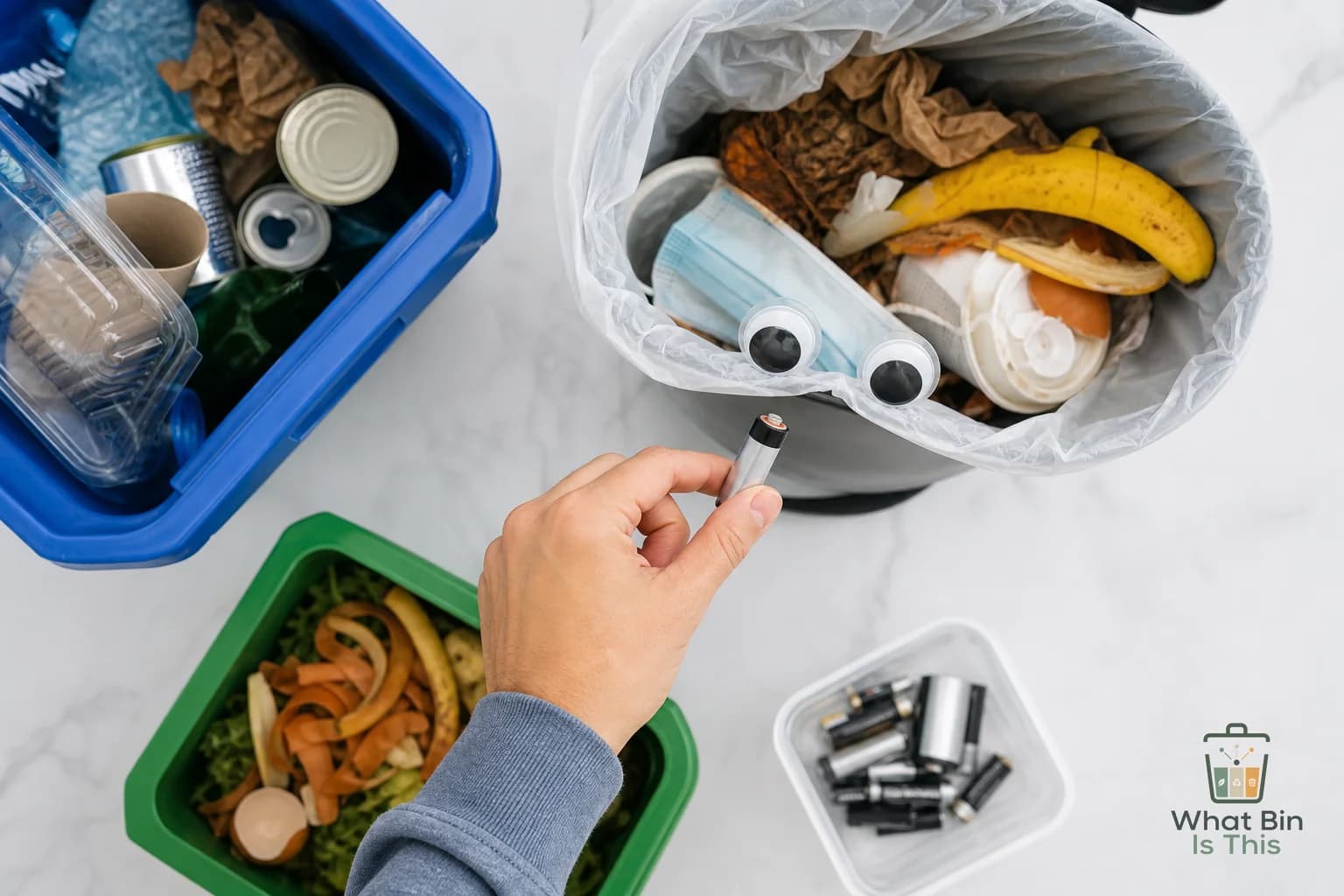
Batteries are tiny, useful, and weirdly hard to throw away with confidence. One drawer has dead AA batteries. Another has a swollen phone battery you are pretending not to see. The remote needs new batteries, and now you are holding the old ones over the trash can wondering if this is normal garbage or a little household hazard with branding.
The short version: batteries should not go in curbside recycling. Some can go in household trash in many places, but rechargeable, lithium, button, and damaged batteries usually need a proper drop off.
Direct answer
Do not put loose batteries in your curbside recycling bin.
For disposal, treat batteries by type:
- Single use alkaline batteries like many AA, AAA, C, D, and 9 volt batteries may be allowed in household trash in many areas, but local rules vary.
- Rechargeable batteries should usually go to a battery recycling drop off or household hazardous waste site.
- Lithium batteries and lithium ion batteries should usually go to a battery drop off, not the trash or curbside recycling.
- Button batteries from watches, remotes, hearing aids, toys, and small electronics should go to a battery drop off or hazardous waste program.
- Damaged, leaking, hot, or swollen batteries need extra care. Do not toss them loose into any bin.
If you cannot tell what type it is, do not guess your way into the recycling cart. Set it aside and check your city, county, retailer drop off, or household hazardous waste instructions.
Why batteries are not obvious trash
Batteries look like packaged consumer products, not waste that needs special handling. That is the trap.
A dead battery still has materials inside that can react, leak, spark, or cause trouble when crushed. That matters because curbside recycling is built for common containers and paper, not loose power cells rolling around with cans, cardboard, and glass.
The confusing part is that battery rules changed over time. Older single use alkaline batteries are often treated differently from rechargeable and lithium batteries. Then every household has a mixed pile: old flashlight batteries, a laptop battery, coin cells from a key fob, a rechargeable drill battery, and one mystery rectangle from a device no one remembers owning.
That pile should not be handled as one category. Battery type matters.
Common mistakes
Putting batteries in curbside recycling
This is the big one. People see the word recycling on battery collection boxes and assume the blue bin is fine. It is not. Curbside recycling programs are usually not set up for loose batteries.
A battery in the recycling bin can become a contamination problem, a sorting problem, or a safety problem. If you want the broader version of what does and does not belong in that cart, see What counts as recycling contamination?.
Treating all AA and AAA batteries the same
Some AA and AAA batteries are single use alkaline. Others are rechargeable nickel metal hydride or lithium. They look similar if you are not paying attention.
Check the label. If it says rechargeable, lithium ion, NiMH, NiCd, or Li-ion, do not put it in household trash unless your local program specifically says to. Use a battery drop off.
Tossing button batteries loose into the trash
Button batteries are small enough to seem harmless. They are not a great candidate for mystery-bin behavior.
These are the flat round batteries in watches, scales, hearing aids, key fobs, thermometers, flameless candles, and greeting cards that sing at you long after the joke stopped being funny. Collect them safely and use a drop off option.
Forgetting about 9 volt battery terminals
9 volt batteries have both terminals on one end. If they touch metal or another battery the wrong way, they can cause heat or sparking.
Before storing dead 9 volt batteries for drop off, put tape over the terminals. It takes three seconds and avoids a dumb little garage problem.
Storing a swollen battery in a junk drawer
A swollen phone, laptop, tablet, or power bank battery is not normal household clutter. Do not press it, puncture it, mail it casually, or bury it under takeout menus.
Move it away from flammable clutter if you can do so safely, avoid handling it more than necessary, and look up your local household hazardous waste or battery safety instructions.
Simple battery disposal checklist
Use this when you are standing in the kitchen with a handful of dead batteries:
- Check the label for alkaline, lithium, rechargeable, NiMH, NiCd, or Li-ion.
- Keep batteries out of curbside recycling.
- Tape the terminals on 9 volt, lithium, rechargeable, and button batteries before storage or drop off.
- Store used batteries in a small container, not loose in a junk drawer with keys and coins.
- Take rechargeable, lithium, button, and damaged batteries to a battery drop off or household hazardous waste program.
- Check local rules before trashing single use alkaline batteries.
- Do not toss swollen, leaking, smoking, or hot batteries into any household bin.
Local-rule caveat
Battery disposal is one of those categories where local rules matter more than your instinct.
Some cities allow regular alkaline batteries in trash. Some prefer or require drop off. Some retailers collect common rechargeable batteries. Some household hazardous waste programs take almost every battery type but only on certain days.
The safest general rule is this: when the battery is rechargeable, lithium, button shaped, damaged, or unknown, use a proper drop off. For ordinary single use alkaline batteries, check your local waste authority before choosing the trash.
Also, do not assume a recycling symbol means curbside recycling. Batteries may be recyclable through a special program, but that is not the same as your regular blue bin.
Practical takeaway
Batteries are not one disposal category. The bin depends on the chemistry and condition.
If it is a basic alkaline battery and your local rules allow it, household trash may be acceptable. If it is rechargeable, lithium, button shaped, swollen, leaking, or mysterious, keep it out of both trash and curbside recycling and send it to a battery drop off or household hazardous waste program.
The move is simple: make a small battery container, tape risky terminals, and drop the batch off when you already have an errand nearby. Not glamorous. Very effective.
Need a fast second opinion before you toss something? Search it at What Bin Is This.