July 24, 2026
Can you recycle styrofoam?
Most Styrofoam does not belong in curbside recycling. Learn when foam goes in the trash, when drop-off might work, and what to check first.
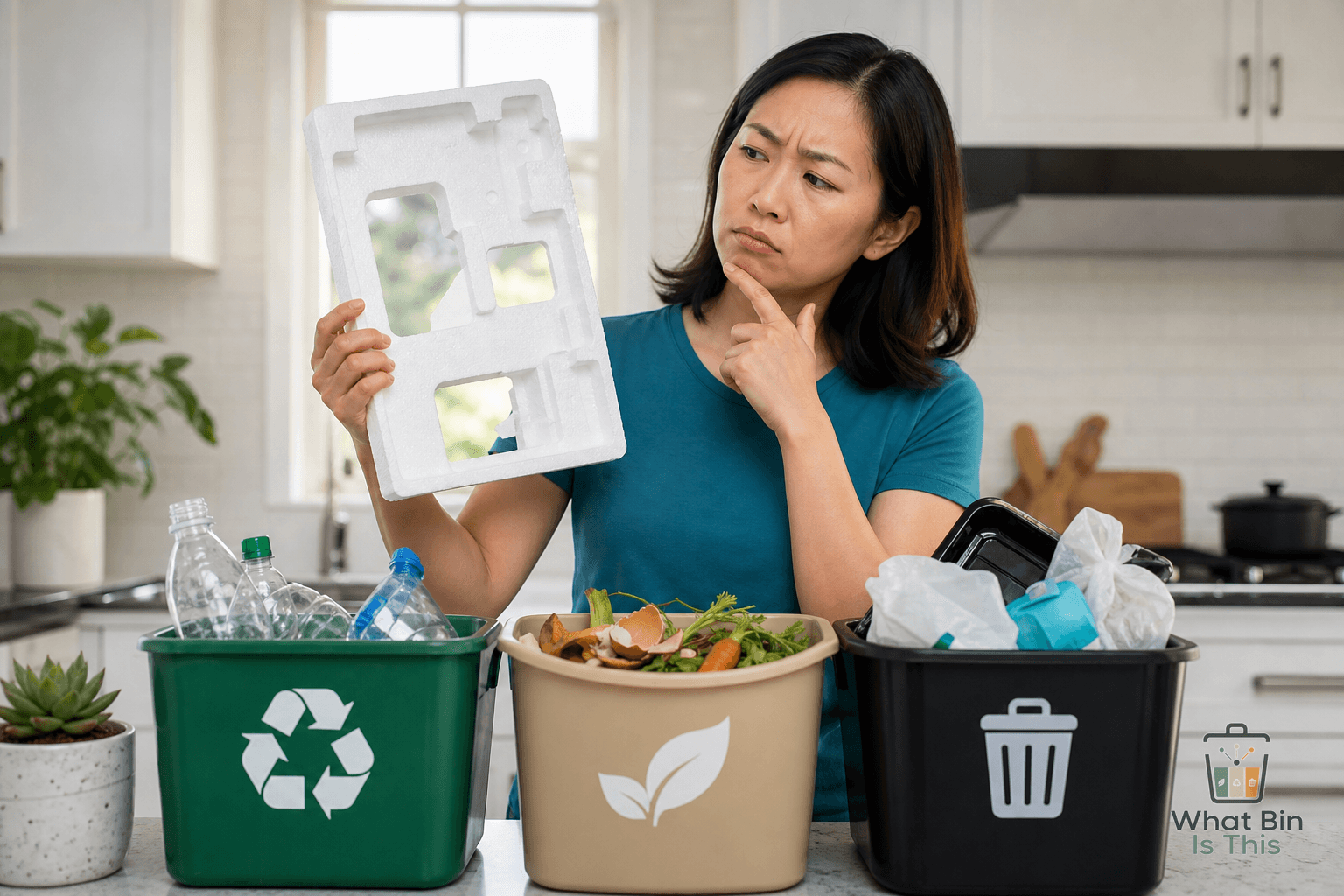
Styrofoam is one of those materials that makes recycling feel like a prank. It is plastic. It often has a recycling symbol. It is lightweight enough to look harmless. Then you check your city rules and discover the answer is usually: not in that bin.
The short version: most household foam does not belong in curbside recycling. Some clean foam packaging can be taken to specialty drop-off sites, but food foam and dirty foam usually go in the trash unless your local program says otherwise.
Direct answer
Most Styrofoam should go in the trash, not your curbside recycling bin.
If you are asking "can you recycle Styrofoam?" because the item has a recycling symbol, check the local rule before trusting the symbol. In most curbside programs, the answer is still no.
That includes foam cups, foam takeout clamshells, foam meat trays, foam plates, and small bits of broken foam packaging. Even when the item has a recycling symbol, many curbside recycling programs do not accept it.
There are a few exceptions. Clean, dry, white block foam from electronics, appliances, or shipped furniture may be accepted at a local foam recycling drop-off. Some shipping stores or reuse centers may also take clean packing peanuts, especially if they are bagged and in good condition.
So the working rule is simple:
- Curbside recycling: usually no
- Trash: usually yes
- Specialty drop-off: sometimes, for clean packaging foam
- Reuse: sometimes, for packing peanuts or shipping materials
If the foam touched food, grease, raw meat juices, or sauce, do not try to sneak it into recycling. That is wishful sorting, and recycling facilities are not built around wishful sorting.
Why the answer is not obvious
The confusing part is that Styrofoam is a type of plastic. More specifically, most household foam is expanded polystyrene, often marked with a number 6 recycling symbol. That symbol tells you what the material is. It does not mean your local recycling program accepts it.
Foam creates a few problems in curbside recycling.
First, it is mostly air. That makes it bulky to collect and transport, but low in material value. A truck can fill up with foam quickly without collecting much actual plastic.
Second, it breaks apart. Tiny foam pieces can scatter through the truck, the sorting facility, and other recyclables. Nobody wants foam crumbs stuck to otherwise good paper and containers.
Third, food foam is often dirty. A foam tray from raw chicken or a clamshell with sauce residue is not the same as a clean plastic bottle. Food residue can turn a questionable recyclable into straight trash.
This is the same kind of trap that shows up with other contamination problems. If you want the broader sorting logic, read What counts as recycling contamination?.
Common mistakes
The biggest mistake is trusting the recycling symbol more than the local rule. The number on the bottom is not a permission slip. It is a resin code. Your city, hauler, or drop-off site decides what actually gets accepted.
Another mistake is putting foam in a plastic bag and tossing it into recycling. Bagging problem materials usually makes things worse, not better. Bagged recyclables can be treated as trash because workers cannot safely or quickly inspect what is inside. Plastic bags have their own rules, too. See Can plastic bags go in the recycling bin? if you are sorting those next.
People also mix up different foam items. A clean foam block from a TV box is not the same as a greasy foam takeout box. One might have a drop-off option. The other is usually trash.
Packing peanuts are another weird case. Some are foam. Some are starch based and dissolve in water. Do not assume they are recyclable. If they are clean and dry, reuse is often the better move. If you do not need them, check whether a local shipping store wants them. If not, bag them tightly and trash them so they do not scatter everywhere.
And yes, breaking foam into smaller pieces does not make it more recyclable. It just makes a larger mess in a smaller format.
Quick checklist before you toss it
Use this quick sort:
- Is it a foam cup, plate, tray, or takeout container? Put it in the trash unless your local program specifically accepts it.
- Did it touch food, grease, sauce, or raw meat? Trash.
- Is it clean white block foam from packaging? Check for a foam recycling drop-off.
- Is it packing peanuts? Reuse them or ask a shipping store. If no option, bag and trash.
- Is it labeled compostable? Do not assume. Check your local compost rules.
- Is your curbside guide silent about foam? Keep it out of curbside recycling.
When in doubt, the safer move is usually trash, not recycling. That sounds backwards to people trying to do the right thing, but contamination can make a recycling load harder to sort.
Check the local rule before you commit
Foam rules are local. Some areas have foam collection events. Some have permanent drop-off locations. Some accept only clean block foam. Some accept foam coolers. Some accept nothing.
Look for wording like:
- “Expanded polystyrene”
- “EPS foam”
- “Number 6 foam”
- “Foam packaging”
- “Styrofoam”
Also watch for the difference between “accepted at drop-off” and “accepted curbside.” Those are not the same thing. A city may have a recycling option without wanting foam in the blue bin at your house.
If your local guide says no foam, do not overthink it. Put it in the trash or save clean packaging foam for a verified drop-off. The recycling symbol does not outrank the collection rule.
Practical takeaway
Styrofoam is usually trash at home. Clean packaging foam may be recyclable through a specialty drop-off, but curbside recycling usually does not want it.
The cleanest household rule is this: food foam goes in the trash, dirty foam goes in the trash, and clean block foam only gets recycled if you have a confirmed local drop-off.
If you are standing over the bin with a foam tray in one hand and too much confidence in the recycling symbol, pause. The symbol is not the answer. The local program is.
Need a quick second opinion on a mystery item? Try What Bin Is This before it becomes bin roulette.