July 13, 2026
Can you recycle frozen food boxes?
Most frozen food boxes are trash unless your local program specifically accepts coated paperboard. Here’s the quick kitchen rule.
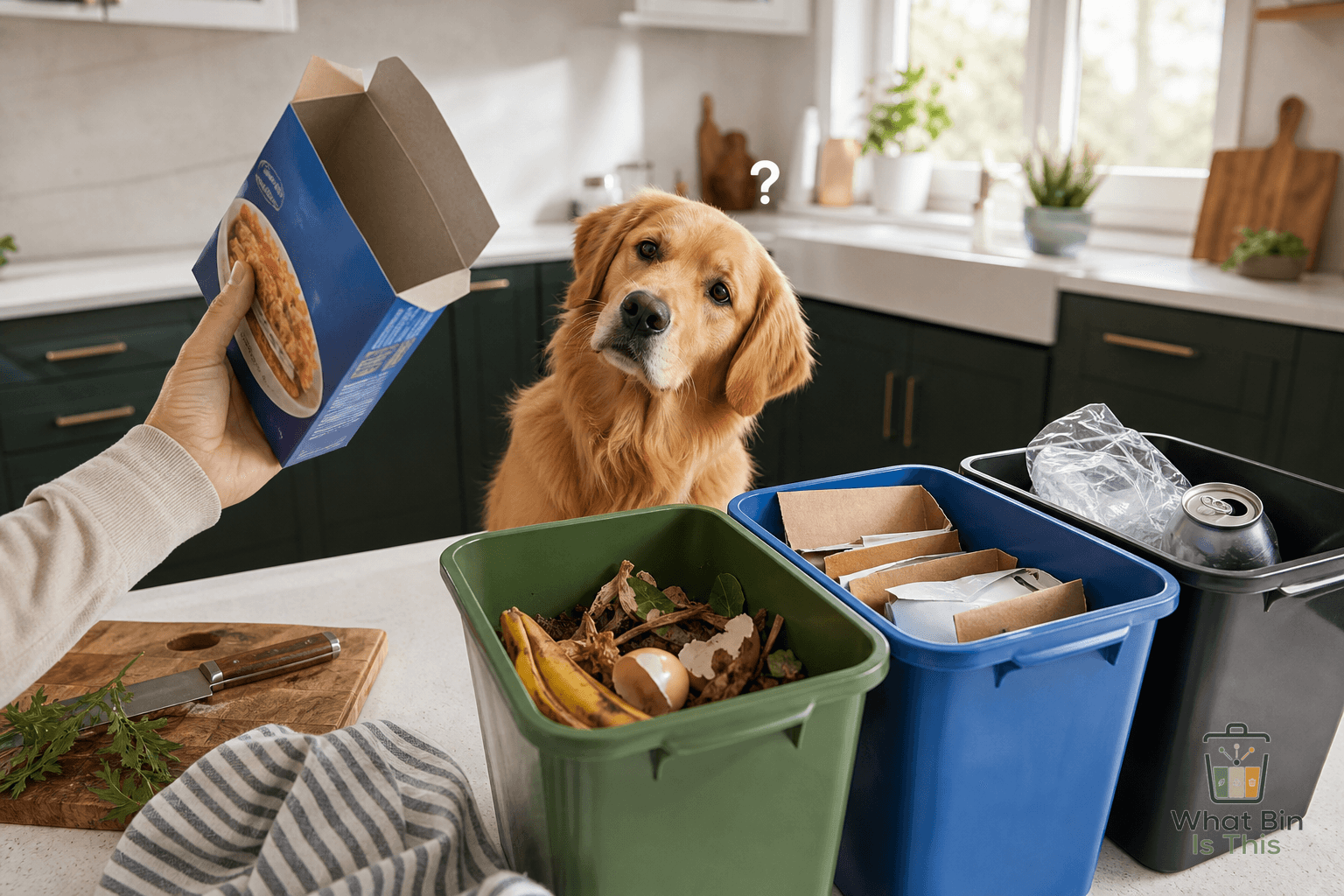
Frozen waffles, frozen pizza, veggie burgers, ice cream bars, and freezer meals all create the same small kitchen question: the box looks like cardboard, so does it go in recycling?
The short version is simple, but a little annoying: many frozen food boxes are not treated the same as regular cardboard or cereal boxes. They often have coatings or additives that help them survive freezer moisture, and those coatings can change what your local recycling program wants.
Direct answer
Most frozen food boxes should go in the trash unless your local recycling program specifically says it accepts frozen food boxes or coated paperboard.
If your city, hauler, or transfer station guide says frozen food boxes are accepted, then empty the box, remove any inner plastic bag or tray, flatten the box, and recycle it. If your local guide says no frozen food boxes, or does not mention them, the safer default is trash.
A few quick household rules:
- Regular clean cardboard shipping boxes are usually recyclable.
- Cereal-style paperboard is often recyclable.
- Frozen food paperboard is often not accepted because it may be coated or treated.
- Inner plastic bags, film wrappers, and sealed pouches usually do not go in curbside recycling.
- Food-soaked or greasy packaging should stay out of recycling.
If you are sorting other cardboard at the same time, this guide may help: Clean cardboard vs. greasy cardboard: what goes in recycling?.
Why frozen food boxes confuse people
Frozen food boxes are confusing because they look almost identical to recyclable paperboard. They are printed, foldable, lightweight, and box-shaped. Your brain sees cardboard. The recycling bin seems like the obvious choice.
The hidden issue is moisture resistance. Freezers are damp places. Food packaging has to handle condensation, frost, thawing, and refreezing without getting soggy or falling apart in your hands. To do that, some frozen food boxes use coatings, plastic layers, waxy finishes, or wet-strength additives.
Those materials can make the box harder to process with regular paper recycling. Paper mills want fibers that break down cleanly in water. If the box is designed not to break down when wet, that can be a problem.
The tricky part is that you usually cannot confirm the exact coating by looking at the box. Some feel waxy. Some feel like normal paperboard. Some local programs accept them anyway because their processor can handle that material. Others reject them because their paper markets do not want it.
That is why frozen food boxes are one of those items where a local rule matters more than the packaging vibe.
Common mistakes
The most common mistake is treating every thin cardboard box like a cereal box. A cracker box and a frozen entrée box may look similar, but they may not behave the same at a paper mill.
Another mistake is recycling the whole package without separating the parts. A frozen vegetable box might contain a plastic pouch. A frozen meal box might include a plastic tray, film seal, sauce packet, or absorbent pad. Those pieces should be sorted separately. In most households, the film, pouches, and mixed-material liners go in the trash unless your area has a specific drop-off option for that exact material.
A third mistake is relying only on recycling symbols or packaging claims. A symbol on the package does not automatically mean your curbside program accepts it. It may describe the material type, a general recyclability claim, or a program that only works in some places.
Frozen pizza boxes add another layer of confusion because they can involve both freezer coating and food grease. If pizza boxes are your main question, see Can you recycle pizza boxes?.
Also watch out for ice cream cartons. Many are coated paperboard too, but they are a slightly different item from frozen meal boxes. Local programs often list them separately, so do not assume one rule covers both.
Simple checklist
Use this quick check before you toss the box:
- Is the box empty? If not, remove all food and loose crumbs.
- Is there an inner plastic bag, tray, or film? Remove it.
- Does your local recycling guide clearly accept frozen food boxes or coated paperboard? If yes, recycle the clean flattened box.
- Does your local guide clearly reject frozen food boxes? Put it in the trash.
- Is the box greasy, wet, food-soaked, or full of stuck-on food? Put it in the trash.
- Are you unsure and standing at the bin right now? Trash is the safer default for frozen food boxes in many areas.
That last point is not about perfection. It is just a practical way to avoid mystery-bin decisions when the local answer is not obvious.
Local rules can vary
Frozen food box rules vary because recycling programs do not all sell material to the same processors. One city may have a paper mill nearby that accepts coated paperboard. Another may send mixed paper to a processor that rejects it. Even neighboring towns can give different answers.
The best local search terms are:
- frozen food boxes recycling
- coated paperboard recycling
- freezer boxes recycling
- paperboard cartons recycling
- your city name plus recycling guide
If your local guide has a searchable disposal tool, use the exact item name. Search frozen food box, frozen meal box, frozen pizza box, and ice cream carton separately if needed. They are often listed as different categories.
Practical takeaway
If you are holding a frozen food box and your local program does not clearly accept it, put it in the trash. If your local guide says frozen food boxes or coated paperboard are accepted, empty it, flatten it, and recycle only the clean box.
The inner bags, plastic trays, film seals, and sauce packets are usually trash unless your area gives a specific alternative.
When in doubt, check the local rule rather than guessing from the look of the box. Frozen packaging is designed to survive the freezer, which is exactly why it can be a weird fit for paper recycling.
Need a quick second opinion while you are standing by the bin? Try What Bin Is This.