

October 5, 2026
Do old electronics go in the recycling bin?
Most old electronics should not go in curbside recycling. Here is where small devices, gadgets, and e-waste usually belong instead.
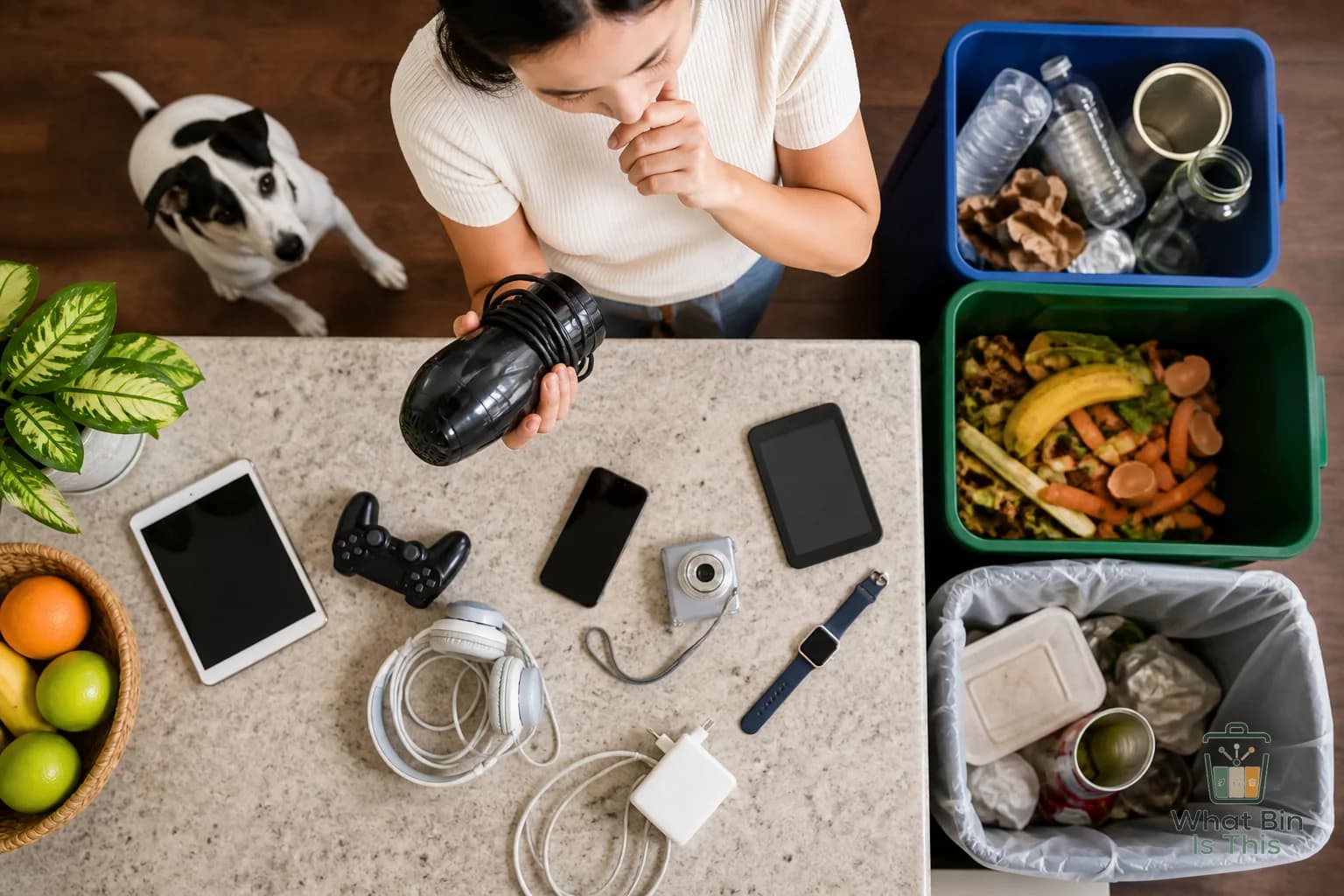
Old electronics are one of those household categories that feel recyclable but rarely belong in the regular recycling bin.
A dead tablet is plastic, glass, metal, wires, and a battery. A broken speaker might have a circuit board, magnets, screws, foam, and a rechargeable cell hiding inside. That mix is exactly why the blue bin is usually the wrong place for it.
If you are holding an old gadget and hoping the recycling truck can sort it out, pause for a second. This is a drop off item in most places, not a curbside item.
The direct answer
No, most old electronics should not go in your curbside recycling bin.
That includes items like:
- Old phones
- Tablets and e-readers
- Small speakers
- Keyboards and computer mice
- Routers and modems
- Digital cameras
- Game controllers
- Remote controls
- Headphones and earbuds
- Small household gadgets with circuit boards
These are usually considered electronic waste, often shortened to e-waste. They should normally go to an electronics recycling drop off, a retail take back program, a municipal collection event, or a household hazardous waste facility if your local rules send them there.
The regular recycling bin is built for things like accepted bottles, cans, paper, cardboard, and some containers. It is not built to safely handle loose electronics, built in batteries, tangled cords, or broken circuit boards.
If the item has a plug, a charging port, a battery compartment, a screen, or a circuit board, assume it needs a special route unless your local program clearly says otherwise.
Why this answer is not obvious
The confusion is reasonable. Electronics look valuable. They often contain metal. Some even have recycling symbols on the plastic shell.
But curbside recycling is not a general material recovery magic trick. It depends on predictable items moving quickly through sorting equipment. A bottle behaves like a bottle. A cardboard box behaves like cardboard. A broken Bluetooth speaker does whatever chaotic little brick of wires and batteries wants to do.
Electronics can cause problems for several reasons:
- They are made from mixed materials that are hard to separate on a curbside sorting line.
- Many contain lithium ion or rechargeable batteries.
- Small devices can get crushed, jammed, or missed.
- Cords and wires can wrap around sorting equipment.
- Screens, circuit boards, and internal parts may need specialized handling.
The annoying part is that some electronics really are recyclable, just not in the bin you use for cereal boxes and soup cans. The destination matters more than the word recyclable.
Common mistakes
The biggest mistake is treating “recyclable somewhere” as “recyclable curbside.” Those are not the same thing.
A few common household misfires:
Putting a dead phone in the blue bin. Phones should usually go to an electronics recycler, retailer take back box, carrier trade in program, or local e-waste event. If it has a lithium battery, it deserves extra attention.
Tossing a small gadget because it is too minor to matter. Earbuds, fitness trackers, smart watches, and little remotes still count. Small does not mean curbside safe.
Bundling cords with regular recyclables. Cords and cables can tangle sorting equipment. If cable clutter is the thing you are dealing with, see Can old chargers and cables go in the recycling bin?.
Leaving batteries inside removable battery compartments. If the batteries come out easily, remove them and follow your local battery disposal guidance. Do not hide loose batteries in a bag of electronics and hope everyone has a great day.
Assuming a donation center wants broken electronics. Some thrift stores accept working electronics. Many do not accept broken, outdated, or battery damaged items. Call or check the donation rules before dropping off a box of mystery gadgets.
Putting electronics in a plastic bag before recycling. Plastic bags can create their own sorting problems. If a drop off site wants items bagged, it will usually say so. Curbside recycling almost never benefits from a surprise bag of stuff.
A simple old electronics checklist
Use this quick sort before you choose a bin:
- Does it plug into a wall?
- Does it charge with a cable?
- Does it have a screen?
- Does it have a removable or built in battery?
- Does it contain a circuit board?
- Is it a computer, phone, audio device, game device, camera, router, or small smart gadget?
If you answered yes to any of those, do not put it in curbside recycling unless your local program specifically accepts that item.
Better options usually include:
- City or county e-waste drop off sites
- Special electronics recycling events
- Retailer take back programs
- Manufacturer mail in or trade in programs
- Mobile carrier trade in or recycling bins
- Household hazardous waste facilities, depending on the item
Before you drop anything off, remove personal data when relevant. For phones, tablets, computers, cameras, and storage devices, sign out of accounts, back up what you need, and factory reset the device when possible.
Check the local rule before you drive across town
Electronics rules vary a lot by city, county, and hauler. Some places have permanent e-waste sites. Some run collection days a few times a year. Some retailers accept certain devices but not others. Some programs charge for TVs or monitors but take small electronics for free.
The local rule can also depend on the exact item. A keyboard may be easy to drop off. A cracked laptop with a swollen battery may need different handling. A remote control with removable alkaline batteries is not the same problem as a rechargeable power bank.
That is why “electronics recycling” is a category, not a single bin answer.
When in doubt, search your city or county name plus “electronics recycling,” “e-waste drop off,” or “household hazardous waste.” Look for the accepted items list, not just the headline.
Practical takeaway
Old electronics usually do not go in the recycling bin at home. They are special drop off items because they are made from mixed materials and may contain batteries, circuit boards, or parts that regular recycling facilities are not set up to handle.
Use curbside recycling for the items your local program clearly accepts. Send old electronics through an e-waste route, a retailer take back program, or your city or county collection option.
If you are staring at a drawer full of dead gadgets and half remembered cables, you are not alone. That drawer is basically a museum of bad charging standards.
For a quick item by item answer, check it in What Bin Is This before it becomes another permanent resident of the junk drawer.