July 15, 2026
Can you recycle prescription bottles?
Empty prescription bottles look recyclable but curbside rules are picky. Here is when they go in recycling and when they belong in the trash.
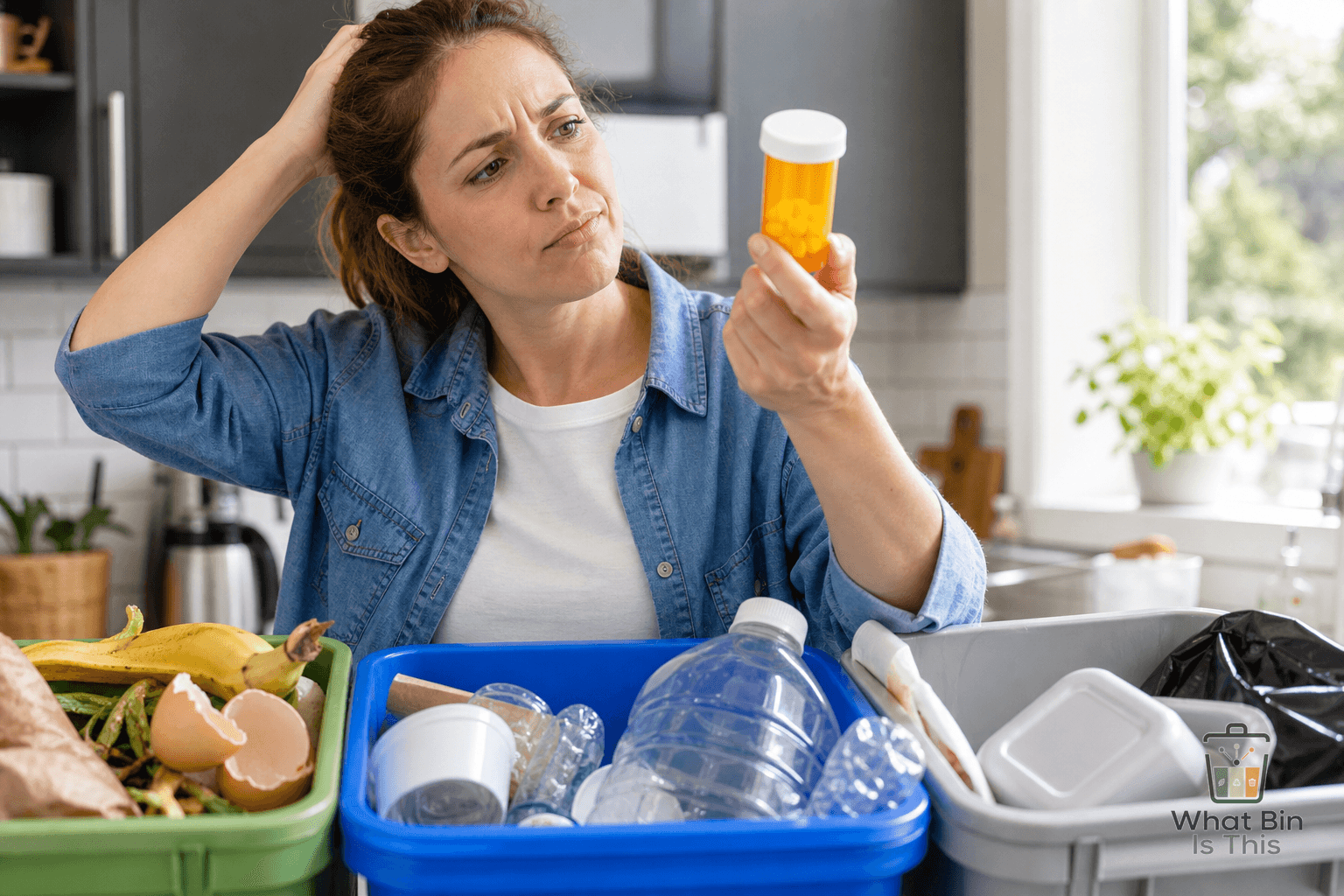
Prescription bottles feel like they should be easy. They are plastic, they are small, and they usually have a recycling number stamped on the bottom. Then you peel off the label, stare at the orange vial, and realize the number does not actually answer the bin question.
The short version: treat prescription bottles as a local-rule item, not an automatic recycling item.
The short answer for empty prescription bottles
Most empty prescription bottles should not go in curbside recycling unless your local program specifically accepts them.
That sounds annoying, because many prescription bottles are made from recyclable plastic. The catch is size. Small bottles can fall through sorting equipment, get mixed with glass, or end up as residue before anyone has a chance to sort them by plastic type.
If your city or hauler says prescription bottles, medicine bottles, or small plastic vials are accepted, recycle them empty, clean, and with the cap screwed back on. Remove or black out your personal information first.
If your local program does not mention them, the safer default is trash for the empty bottle.
Leftover pills are a separate issue. Do not put medication in the recycling bin. Use a pharmacy take-back box, a community collection site, or the disposal instructions from your pharmacy or local waste authority.
Why the recycling number does not settle it
The recycling number tells you the plastic resin. It does not guarantee your local recycling facility wants that item.
A lot of prescription bottles are marked #5 plastic, and some are #2. In theory, those plastics can be recycled. In practice, a tiny orange bottle with a childproof cap is not the same as a larger tub, jug, or bottle on a sorting line.
Sorting systems are built around common shapes and sizes. A detergent jug behaves differently from a prescription vial. A small cap behaves differently from a yogurt tub. Material matters, but shape, size, color, and market demand matter too.
This is where households get tripped up. The symbol looks official. The local rule may still say no.
For a broader look at this exact kind of mismatch, see What counts as recycling contamination?.
Mistakes that make prescription bottles harder to sort
The most common mistake is tossing a half-full bottle into recycling because the container is plastic. Recycling facilities are not set up to handle medication. Pills, powders, cotton, and foil seals should not be inside the bottle.
Another mistake is tossing loose caps into the bin. Small caps can fall through equipment on their own. If your local program accepts the bottle, put the empty cap back on the empty bottle. If the program does not accept prescription bottles, do not try to sneak the cap in separately.
Labels are also worth dealing with. The label may not ruin the recycling process, but it can expose your name, address, prescriber, medication, or pharmacy information. Peel it off if it comes off cleanly. If not, scribble over the personal details with a dark marker or tear the label.
Do not bag a handful of pill bottles and put the bag in curbside recycling. Bagged recyclables are often treated as trash because workers cannot safely or quickly verify what is inside. If your area accepts these bottles, they usually need to be loose, empty, and prepared according to local instructions.
Your city gets the final vote
Prescription bottle rules vary because recycling systems vary. One city may accept #5 plastic containers but exclude small items. Another may accept prescription bottles only through a special pharmacy or community collection program. Another may tell you to place empty vials in the trash.
Search your local recycling guide for terms like prescription bottle, medicine bottle, pill bottle, pharmacy vial, or #5 plastic. If the guide only says plastic bottles and jugs, do not assume that includes tiny medicine vials. Some programs use bottle to mean beverage, soap, detergent, and similar containers.
If your pharmacy has a take-back bin for medication, that does not automatically mean it wants empty bottles. Many take-back bins are for unwanted medicine only. Read the sign before dropping in a pile of empties.
If you cannot find a local answer, trashing the empty bottle is usually better than wish-cycling it. A small item in the wrong stream can create more handling than it is worth.
A simple prescription bottle checklist
Before you decide, run through this:
- Is the bottle completely empty?
- Are all pills, powders, cotton, and inserts removed?
- Have you removed or covered your personal information?
- Does your local recycling guide specifically accept prescription bottles or small medicine vials?
- If accepted, does your program want the cap attached?
- If not accepted, can a pharmacy, clinic, or community program reuse or collect empty bottles?
- If there is no accepted recycling or reuse option, put the empty bottle in the trash.
That checklist sounds longer than the item deserves, but it beats keeping a cabinet full of mystery vials because nobody wants to make the wrong call.
The practical move
For most homes, the cleanest rule is this: empty the bottle, protect your personal information, check your local list, and only recycle it if prescription bottles are specifically accepted.
If your local rules do not name them, put the empty bottle in the trash. Do not include leftover medication, and do not assume the recycling number is enough.
For pills you no longer need, look for a pharmacy take-back option or follow your local disposal guidance. The bottle and the medicine may have started together, but they often do not belong in the same disposal path.
Not sure what your local program does with a specific item? Check it in What Bin Is This before you guess.