September 30, 2026
Can you recycle plastic takeout containers?
Plastic takeout containers are sometimes recyclable, but only if your local program accepts that shape and resin type. Check before tossing them in.
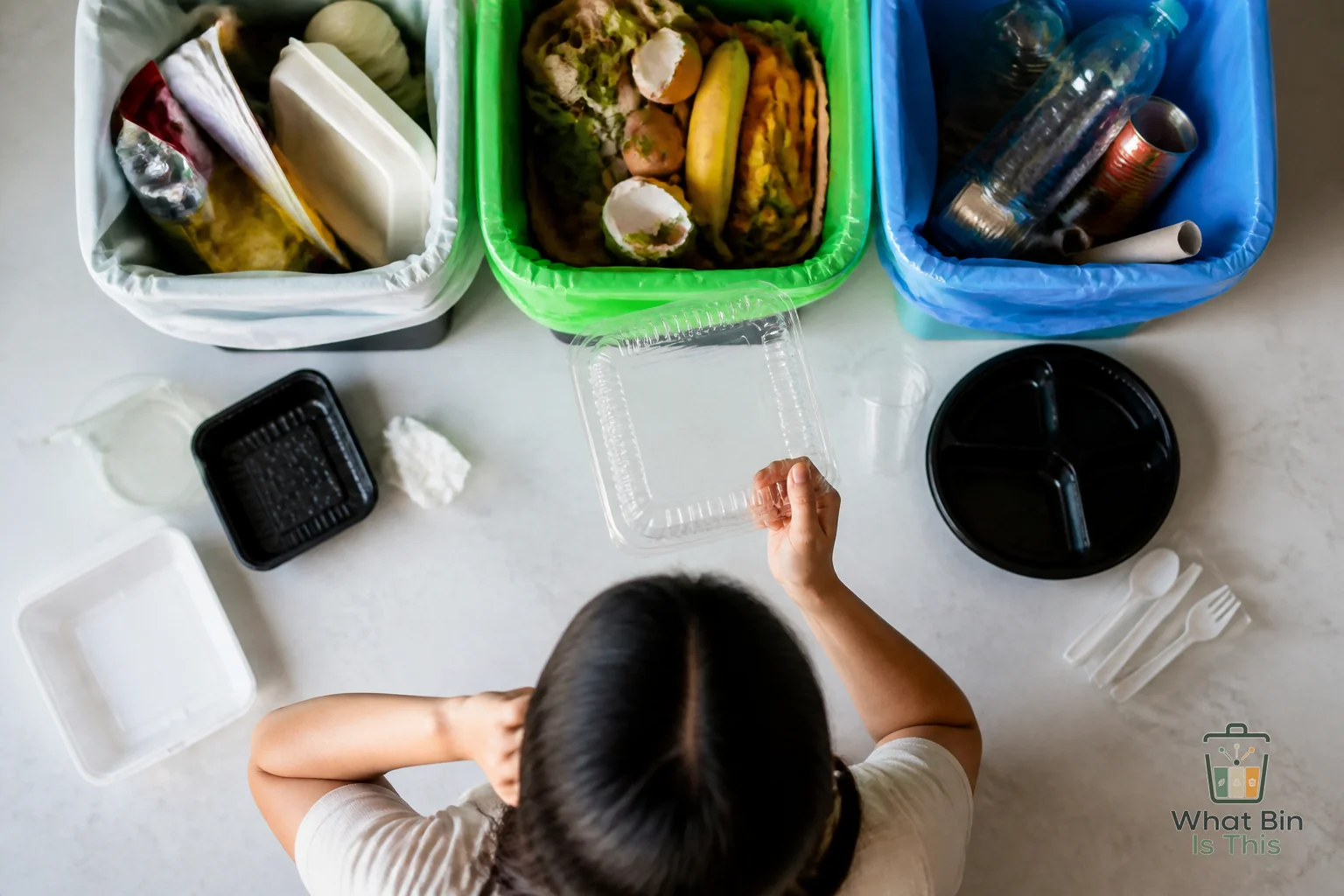
Plastic takeout containers look like they should be easy. They are plastic. They often have a recycling symbol. Some even say PET, PP, or recyclable right on the bottom.
And then you stand over the bin with a greasy black tray, a clear clamshell, a sauce cup, and a lid that somehow feels like it belongs to a different civilization.
The annoying part is that the number on the container is only part of the answer. Shape, color, food residue, and your local recycling program all matter.
The short answer
Some plastic takeout containers can go in curbside recycling, but many cannot.
In general, a plastic takeout container has the best chance if it is:
- Empty
- Lightly rinsed or wiped clean
- Rigid, not crinkly or flimsy film
- Accepted by your local program by shape and number
- Not made of foam
- Not black plastic, unless your area specifically accepts it
Clear plastic tubs and lids marked #1 PET or #5 PP are accepted in some curbside programs. But clamshells, black trays, foam containers, and tiny condiment cups are often rejected.
Do not assume the chasing arrows symbol means yes. That symbol often identifies the type of plastic. It does not promise your city wants it.
Why this answer is not obvious
Plastic recycling rules are weird because recycling facilities do not sort items by vibes. They sort by material, size, shape, color, and whether the item can survive the sorting line.
A yogurt tub and a takeout clamshell might both be plastic, but they may behave differently in the machinery. A clear bottle and a clear salad box might both be #1 plastic, but some programs want bottles and jugs only, not flat clamshell packaging.
Black plastic is another trap. It may be made from a recyclable resin, but many sorting systems struggle to identify it. If the scanner cannot read it, it may get kicked out as trash.
Food residue also changes the call. A container does not need to look brand new, but it should not be full of noodles, sauce, rice, oil, or melted cheese. Recycling is not a dishwashing contest, but the container should be reasonably empty and clean.
Foam is its own problem. Foam takeout boxes are commonly called Styrofoam, though that name gets used loosely. Most curbside programs do not accept foam food containers. If you are dealing with foam packaging, this guide may help: Can you recycle styrofoam packaging?
Common mistakes
The biggest mistake is treating every plastic item with a recycling number as curbside recyclable. The number tells you the plastic resin. It does not tell you whether your local recycling program accepts that item.
Another mistake is recycling greasy or food filled containers because the container itself is technically recyclable. If it still has a layer of curry, dressing, soup, or meat juice in it, trash is usually the safer call.
People also toss in loose plastic lids without checking size. Larger snap on lids may be accepted with the matching container in some programs. Tiny lids and sauce cup tops can be too small to sort properly.
Plastic film lids are a no for curbside bins in most places. If the lid peels back like a wrapper, seal, or bag material, it usually does not belong in curbside recycling. Plastic bags and flexible film have their own rules because they can jam sorting equipment. For more on that mess, see Can plastic bags go in the recycling bin?
Then there is the classic mystery move: stacking different materials together. A plastic container with a paper sleeve, a foil seal, leftover sauce, and a fork inside is not a recycling win. It is a tiny junk drawer with noodles.
Check your local rule
Local rules matter a lot for takeout containers.
Some cities accept plastic tubs, cups, and lids. Some only accept bottles, jugs, and jars. Some accept #1 and #2 but not #5. Some accept #5 tubs but not #1 clamshells. Some programs reject black plastic entirely. Others may have drop off options that curbside pickup does not offer.
The fastest local check is to search your city or hauler site for:
- Plastic takeout containers
- Plastic clamshells
- Plastic tubs and lids
- Black plastic
- Foam food containers
- Accepted plastics by number
If the local guide says bottles and jugs only, that usually means takeout tubs and clamshells should stay out of the curbside recycling bin.
When the guide says containers, tubs, or food packaging are accepted, rinse or wipe the item first and follow any lid instructions.
Simple checklist
Before you recycle a plastic takeout container, ask:
- Is it empty?
- Is it mostly clean?
- Is it rigid plastic, not film or foam?
- Does your local program accept this shape?
- Does your local program accept this plastic number?
- Is it large enough not to fall through sorting equipment?
- Is the lid accepted too, or should it go in trash?
If you answer no or not sure to several of those, trash may be the better choice.
What to do today
For a typical plastic takeout container, use this rule:
If it is a clean rigid tub or lid that your local program accepts, recycle it. If it is foam, black plastic your area does not accept, a flimsy film lid, a tiny sauce cup, or still full of food, put it in the trash.
That may feel unsatisfying, but it is better than wish cycling. Tossing questionable plastic into recycling does not make it recyclable. It just makes someone else deal with the maybe pile later.
When in doubt, check the local rule by item, not just by the recycling number. That one extra step is usually the difference between a good recycling call and a confident mistake.
Need a quick second opinion while you are standing over the bin? Look up the item on What Bin Is This.