September 28, 2026
Can you recycle milk cartons?
Milk cartons are recyclable in some cities, but not everywhere. Empty them, rinse lightly, and check whether your local program accepts cartons.
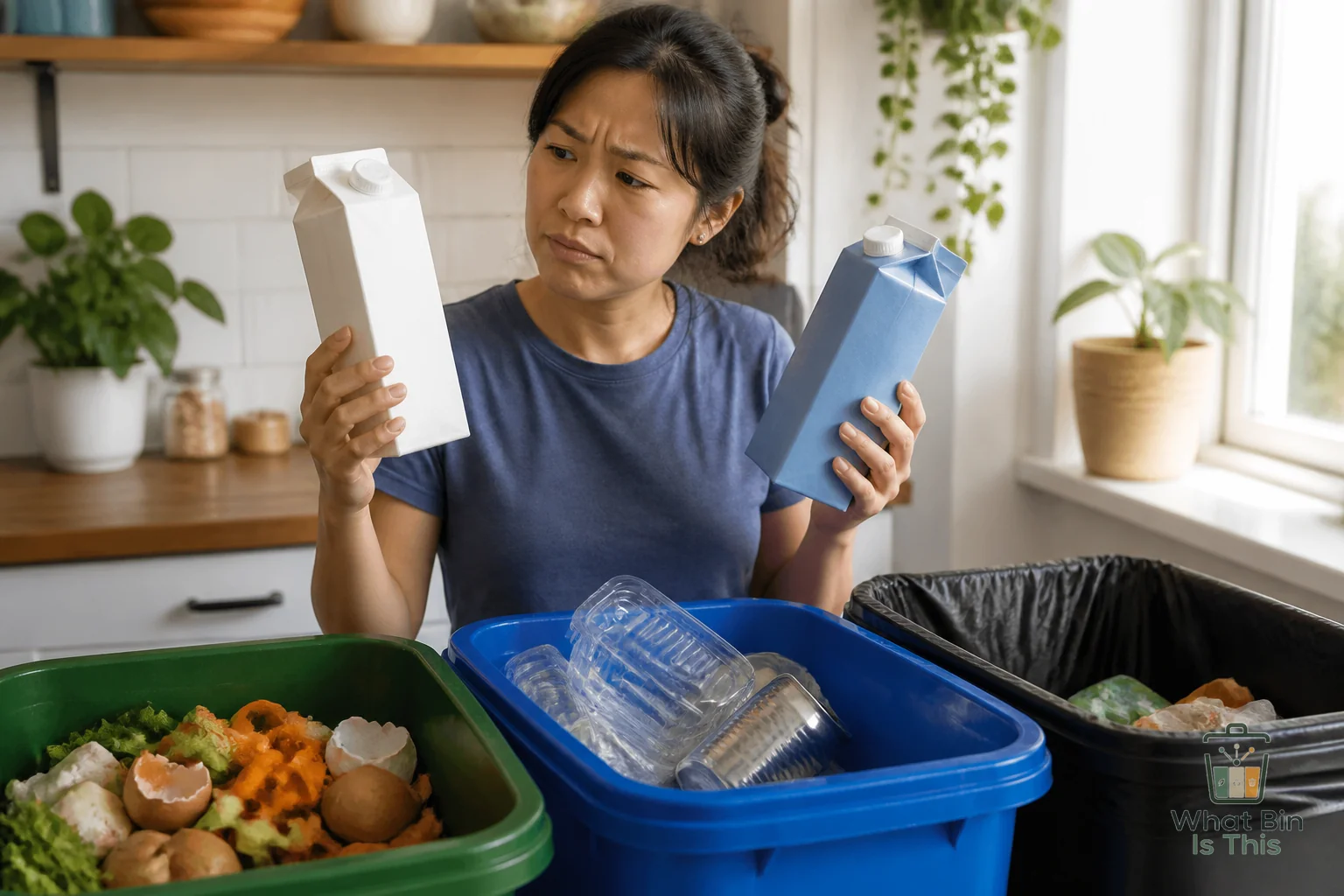
Milk cartons look like cardboard, act like plastic, and somehow end up making normal people stare into the bin like they are defusing something. The short version: some milk cartons are recyclable, but your local program gets the final vote.
That includes refrigerated milk cartons, shelf stable milk cartons, cream cartons, broth cartons, juice boxes, and plenty of plant milk cartons. They are not all handled the same way everywhere.
Direct answer
Milk cartons can go in the recycling bin if your curbside recycling program accepts cartons.
If cartons are accepted where you live, empty the carton, give it a quick rinse if it has milk residue, put the cap back on if your program allows it, and place it loose in the recycling bin. Do not put cartons inside a plastic bag.
If your local program does not accept cartons, put the carton in the trash unless your area offers a special drop off option.
The annoying part is that the carton may look recyclable even when your local facility does not want it. That is not you being bad at recycling. It is the packaging doing too many jobs at once.
Simple checklist
Use this quick check before tossing it:
- Is the carton empty? If not, empty it first.
- Is there thick milk or cream residue inside? Give it a light rinse.
- Does your local recycling guide list cartons, milk cartons, aseptic cartons, or gable top cartons? If yes, recycle it.
- Does your guide say no cartons? Trash it.
- Are you about to put it in a plastic bag first? Do not.
- Is it a pouch, plastic bottle, or foam container instead of a carton? Sort that separately.
If you only remember one thing, remember this: empty cartons are the starting point, local acceptance is the deciding point.
Why the answer is not obvious
Milk cartons are not just cardboard.
Most refrigerated milk cartons are paperboard coated with a thin layer of plastic. Shelf stable cartons usually have paperboard, plastic, and a very thin aluminum layer inside. That layered design keeps liquid in and air out, which is great for milk and annoying for recycling.
A recycling facility has to sort the carton correctly, process it, separate useful fiber from the other layers, and have somewhere to send the material. Some programs are set up for that. Some are not. So the same carton can be acceptable in one city and a contaminant in another.
This is why the symbol on the package is not enough. A recycling symbol, packaging claim, or tidy green label does not override local sorting rules. Packaging designers love making things look recyclable. Recycling facilities care about whether they can actually handle the material.
There is also a naming problem. Your local guide may not say milk cartons. It may say cartons, food and beverage cartons, aseptic cartons, or gable top cartons. Refrigerated milk cartons are often called gable top cartons because of the folded roof shape. Shelf stable cartons are often called aseptic cartons.
Same kitchen shelf. Different vocabulary. Naturally.
Common mistakes
The first mistake is treating every carton like ordinary cardboard. A cereal box and a milk carton are not the same recycling item. Cardboard boxes are usually dry paper fiber. Milk cartons are liquid packaging with coatings or layers.
The second mistake is leaving liquid inside. A small film of residue is not the end of the world, but a carton with milk sloshing around can leak onto paper, make a mess, and make sorting worse. Empty it. Rinse lightly if needed. You do not need to perform a spa treatment on it.
The third mistake is bagging it. Recyclables usually need to go loose in the bin because sorting equipment has to see and separate them. A bag full of recyclables may be treated like trash in some systems. If you are tempted to bag everything first, read Can plastic bags go in the recycling bin?.
The fourth mistake is assuming the cap always needs to come off. Some programs want caps left on cartons. Some prefer them removed. The most practical default is to check your local guide. If it does not say, leaving the cap on an empty carton is often better than tossing a tiny loose cap into the bin where it may be too small to sort well, but local instructions win.
The fifth mistake is putting cartons in compost because they seem paper based. Milk cartons are not food scraps, and the plastic or aluminum layers do not belong in a typical home compost pile or curbside food scraps cart unless your program specifically says otherwise. Most do not.
Local rule caveat
Carton rules are local because recycling is local. Your city, hauler, transfer station, or materials recovery facility decides what it can collect and sell.
Look for wording like accepted cartons, milk cartons, juice cartons, broth cartons, aseptic cartons, or gable top cartons. If the guide only says cardboard, do not assume that includes milk cartons. If the guide says no cartons, believe it.
Apartment buildings can add another wrinkle. The city may accept cartons, but your building’s collection setup may have different signs or instructions. When the bin label and the website disagree, follow the most specific local instruction you have, or ask the building manager or hauler.
Practical takeaway
If cartons are accepted locally, recycle milk cartons empty, lightly rinsed, and loose in the bin. If cartons are not accepted locally, put them in the trash.
Do not overthink the moral weight of one carton. The real win is not creating a mystery bundle of wet packaging, plastic bags, and wishful thinking. Check the rule once, then make the same decision every time.
When in doubt, search your exact item and location before tossing it. What Bin Is This is built for that moment when you are holding something over the bin and just want the answer.