
July 18, 2026
Can you recycle coffee pods?
Most coffee pods do not belong loose in curbside recycling. Learn when to trash them, when to use a takeback program, and what to do with the grounds.
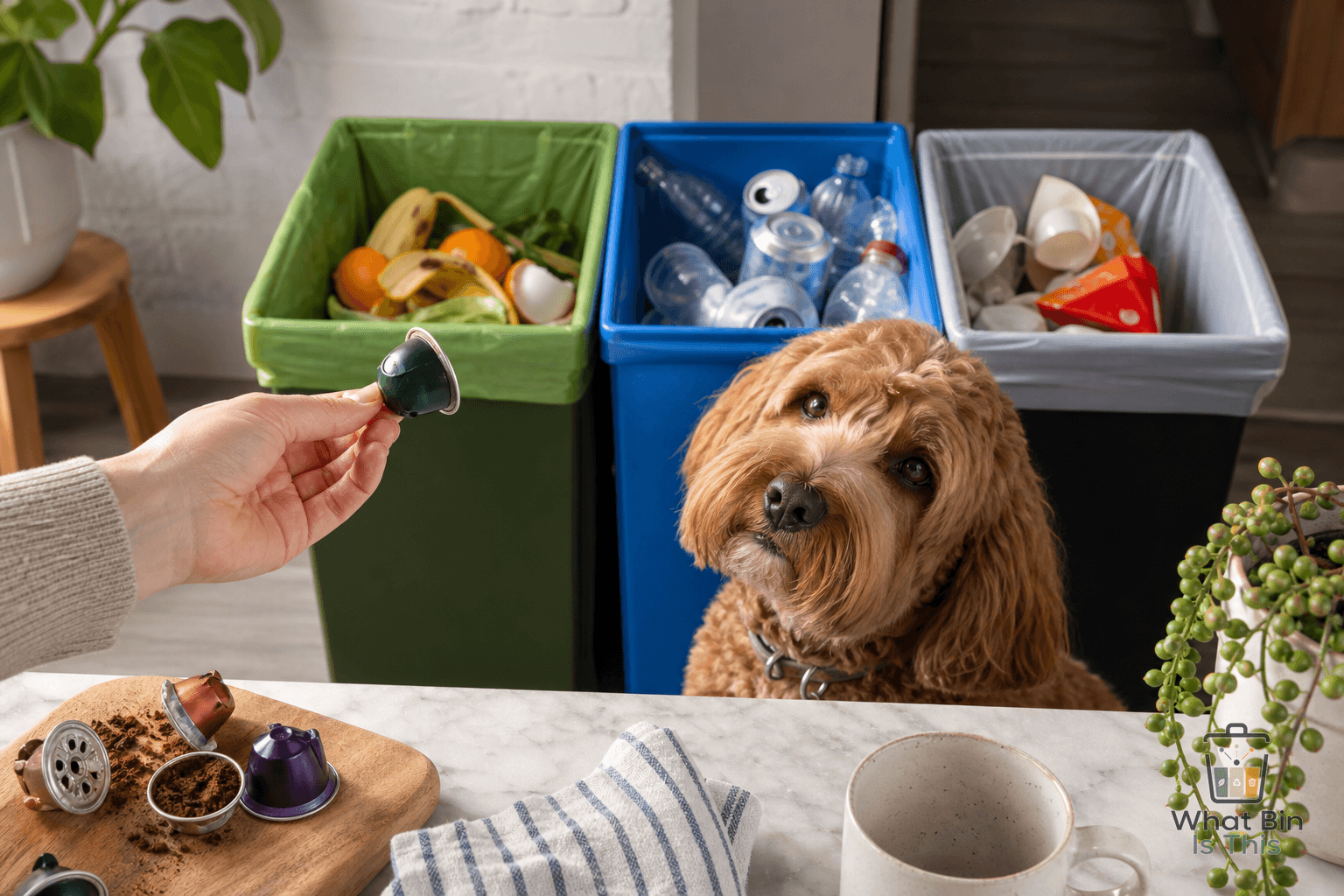
Coffee pods look recyclable. They are small plastic or aluminum cups, often stamped with a recycling symbol, and they come out of the machine looking like they should have a second life.
Then you pick one up and remember it is full of wet coffee grounds, sealed with foil, and sized perfectly to become a sorting facility nuisance.
So, can coffee pods go in the recycling bin? Sometimes, but not as a default move.
Direct answer
Most coffee pods should not go loose in your curbside recycling bin.
Put them in the trash unless one of these is true:
- Your local recycling program specifically accepts that type of coffee pod
- The pod brand offers a mail back or drop off recycling program
- The package gives clear preparation instructions and your local program accepts small plastic or aluminum items
For many households, the lowest drama answer is this:
- Used plastic pods: usually trash
- Used aluminum pods: brand takeback or approved drop off, not loose curbside unless accepted locally
- Compostable pods: only compost if your compost program accepts them
- Coffee grounds: compost if you have a compost option, otherwise trash
The recycling symbol alone does not settle it. It tells you what the item is made from, not whether your local system wants that item in the bin.
Why the answer is not obvious
Coffee pods are a perfect little recycling trap.
They are made from materials that can be recyclable in other forms. Plastic tubs, aluminum cans, and clean metal containers often have clear recycling paths. A coffee pod borrows that credibility, then adds three problems.
First, it is small. Small items can fall through sorting equipment or get screened out before they ever reach the right material stream.
Second, it is mixed material. A typical pod may include a plastic or aluminum cup, foil lid, paper filter, wet grounds, and adhesive. That is a lot going on for something the size of a condiment cup.
Third, it is dirty. Coffee grounds are not dangerous, but they are wet organic material. Loose grounds inside a recycling load can make the item harder to process and can spread mess onto paper and cardboard.
That does not mean every pod is impossible to recycle. It means the pod has to match a real collection system, not just a hopeful toss.
If you want the broader version of this problem, read What counts as recycling contamination?. Coffee pods are a classic example of something that feels recyclable in your hand but may not work in the actual bin.
Common mistakes
Tossing pods in recycling because of the symbol
The chasing arrows can be misleading. A recycling symbol on a plastic pod may identify the resin type. It does not mean your curbside program accepts that shape, size, or condition.
If your city says tubs and bottles only, a small pod is probably not invited.
Recycling pods without emptying them
If your program or brand says pods are recyclable only after preparation, that usually means removing the foil, emptying the grounds, and sometimes rinsing the cup.
That is the tradeoff. The pod may be recyclable, but only after you turn your morning coffee into a tiny disassembly project.
If you are not going to prep it, trash is usually better than wishcycling it.
Putting compostable pods in recycling
Compostable does not mean recyclable. Compostable pods are designed for composting conditions, not recycling equipment.
They can look like plastic, confuse sorting, and contaminate plastic recycling. If your curbside compost program does not accept compostable packaging or coffee pods, put them in the trash.
Compostable items are especially local. Some programs take certified compostable food service items. Others only want food scraps and yard waste. A backyard compost pile may also struggle with pods unless the product is designed for home composting.
Assuming aluminum pods work like aluminum cans
Aluminum is valuable, but aluminum pods are not the same as cans. They are smaller, often have coffee residue, and may need a brand specific collection system.
Some aluminum pod brands run recycling bags or return programs. If you use those, follow the instructions. If you do not, loose pods in the curbside bin may still be a problem.
Bagging loose pods and throwing the bag in recycling
This can make things worse. Bagged recyclables often get treated as trash because workers and equipment cannot easily see what is inside. Plastic bags themselves are also a problem in many curbside recycling systems.
If a takeback program gives you a special bag, use that program. Do not invent your own mystery sack for the recycling cart.
Simple checklist
Before you put a coffee pod anywhere, ask:
- Is it plastic, aluminum, or labeled compostable?
- Does my city or hauler specifically accept coffee pods?
- Does the brand offer a mail back or drop off program?
- Have I removed the lid and emptied the grounds if required?
- Are the grounds going to compost, trash, or staying inside?
- Am I tossing it loose because I know it is accepted, or because I hope it is?
If you cannot answer those quickly, trash is usually the safer household choice.
Local-rule caveat
Coffee pod rules vary because recycling systems are built around local equipment, contracts, and markets. One city may accept prepared plastic pods. Another may reject them because they are too small. A brand takeback program may work nationally, while your curbside bin still says no.
Check your local recycling guide for terms like coffee pods, single serve pods, small plastics, aluminum capsules, or compostable packaging. If the guide does not mention them, do not assume they are accepted.
Also check the pod package carefully. Some instructions apply only if you use a specific collection program. “Recyclable through participating locations” is not the same as “put this in your blue bin.”
Practical takeaway
Coffee pods are not a simple yes or no recycling item. They are a “only if there is a real path” item.
For most homes:
- Trash used pods if no clear local or brand program exists
- Compost loose coffee grounds if you have a compost option
- Use brand takeback for aluminum or specialty recyclable pods
- Keep compostable pods out of recycling
- Do not toss dirty, sealed pods into curbside recycling and hope the system figures it out
The bin does not need a heroic decision before breakfast. It just needs the least messy one.
Not sure about a specific pod, capsule, or coffee packaging item? Look it up with What Bin Is This before it becomes another tiny kitchen argument.