
July 17, 2026
Can you recycle aluminum foil?
Clean, dry aluminum foil can often be recycled if you ball it up. Greasy, tiny, or food-stuck foil usually belongs in the trash.
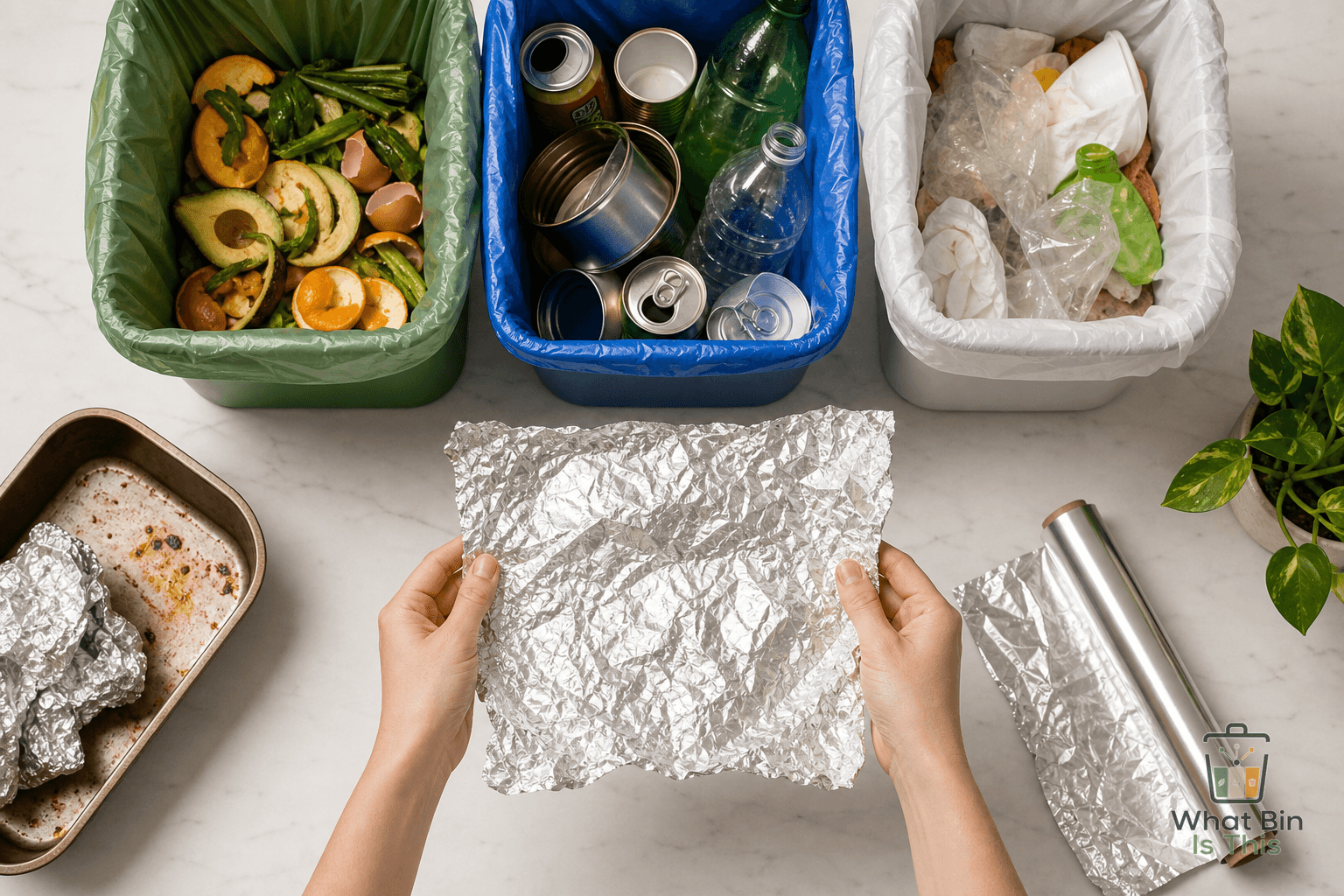
Aluminum foil looks recyclable. It is metal, it came from a roll, and it feels wrong to throw it away after one baked potato. But foil is also one of those kitchen items where the answer changes fast once food, grease, and tiny scraps get involved.
The short version: clean foil has a shot. Dirty foil usually does not.
If you are trying to decide whether you can recycle aluminum foil from dinner, start with condition and size. Clean, dry foil that can be crumpled into a larger ball has the best chance of being accepted; greasy, sauce-covered, or tiny foil scraps usually do not.
Quick answer: recycle aluminum foil only when it is clean, dry, plain foil, and large enough to sort. If it is greasy, burned-on, stuck to food, bonded to paper or plastic, or too small to ball up, trash is usually the better bin.
Direct answer
Aluminum foil can often be recycled if it is clean, dry, and gathered into a large enough ball for sorting equipment to handle.
Put it in the recycling only when:
- Food is scraped off
- Grease is minimal or gone
- The foil is dry
- Small pieces are crumpled together into a ball
- Your local program accepts aluminum foil
If the foil is covered in cheese, sauce, meat drippings, butter, or sticky burnt-on food, put it in the trash. Recycling systems are not dishwashers with conveyor belts. A greasy wad of foil is still a greasy wad of foil.
Some places accept foil with metal cans. Some places only accept aluminum cans and not foil. Some want foil dropped off with scrap metal. That local detail is annoying, but it is also the part that decides whether your foil is useful or just wishful recycling.
Why the answer is not obvious
Foil causes confusion because the material itself is recyclable, but the household version is often a mess.
A clean aluminum pie plate or a big sheet of foil from covering leftovers is very different from a tiny shredded strip stuck to roasted salmon skin. Same material. Different outcome.
There are three main issues.
First, food residue can contaminate other recyclables. Grease and food stuck to materials are common reasons something that looks recyclable gets rejected. If you want a deeper explanation, read What counts as recycling contamination?.
Second, foil is thin and lightweight. Loose little pieces can fall through sorting equipment or get mixed with paper. A tiny clean square of foil may technically be aluminum, but that does not mean the system can recover it.
Third, foil is often used with the exact foods that make recycling harder: pizza, ribs, casseroles, buttery vegetables, baked cheese, and anything that leaks oil. Great dinner. Bad recycling candidate.
Common mistakes
The biggest mistake is treating all aluminum the same. Aluminum cans are widely accepted because they are easy to sort, easy to identify, and valuable in the recycling stream. Foil is flimsier, dirtier, and easier to lose in the system.
Another mistake is tossing tiny clean scraps into the bin loose. Those little bits are not doing heroic recycling work. They are probably just becoming sorting-floor confetti. If you have clean foil pieces, ball them together until the ball is roughly the size of a fist or at least large enough not to disappear.
People also overestimate what rinsing can fix. A quick rinse is fine if the foil had light residue. But if it takes hot water, soap, scraping, and personal commitment to get it clean, the better answer is probably trash. Do not spend five minutes washing a nickel’s worth of foil while questioning your life choices.
Foil-lined paper is another trap. Some wrappers, lids, and pouches look like foil but are actually mixed materials. If it is bonded to paper or plastic, it usually does not belong in curbside recycling unless your local program specifically says yes.
This is similar to the grease problem with cardboard. Clean material and food-soaked material do not behave the same way in recycling. For that version of the problem, see Clean cardboard vs. greasy cardboard: what goes in recycling?.
Simple checklist
Before you toss foil in the recycling, run through this:
- Is it mostly free of food?
- Is it free of heavy grease or sauce?
- Is it dry?
- Is it plain aluminum foil, not foil bonded to plastic or paper?
- Can you crumple small pieces into one larger ball?
- Does your city or hauler accept foil?
If you can say yes to all of those, recycling may be the right bin. If you hit a no, trash is usually the safer call.
For nearby kitchen packaging questions, compare this with Can you recycle chip bags?, Can you recycle pizza boxes?, and Can you recycle yogurt cups?. Foil, film, cardboard, plastic cups, and food residue often look like one recycling problem, but each item has its own sorting rule.
Local-rule caveat
Aluminum foil rules are not the same everywhere. One city may accept clean foil in curbside recycling. Another may reject foil but accept aluminum cans. Another may point you to a scrap metal drop-off.
The reason is not that one place has discovered a secret truth about foil. It is that recycling depends on the local sorting facility, the buyers for the material, and the rules your hauler is paid to follow.
So do not assume the triangle logic applies. Foil often has no label, no helpful number, and no universal curbside rule. Check your local recycling guide if you are not sure, especially for larger foil trays, disposable roasting pans, and pie plates.
If your program says no foil, do not sneak it in because it feels recyclable. That is how the mystery-bin drama starts.
Practical takeaway
Clean aluminum foil may be recyclable. Dirty aluminum foil usually goes in the trash.
If the foil is clean enough, crumple it into a larger ball and recycle it only if your local program accepts it. If it is greasy, saucy, burnt, sticky, or mixed with paper or plastic, trash it.
A good household rule: recycle clean foil in big pieces, trash gross foil in small pieces.
Not sure what your local program accepts? Look it up before you guess. What Bin Is This can help you sort the weird kitchen stuff without turning your counter into a courtroom.