July 12, 2026
Weekly Review: Gel Packs, Glassware, Grease, and Takeout Traps
Gel ice packs, drinking glasses, cooking oil, egg cartons, takeout containers, and yogurt cups: here is the practical bin check.
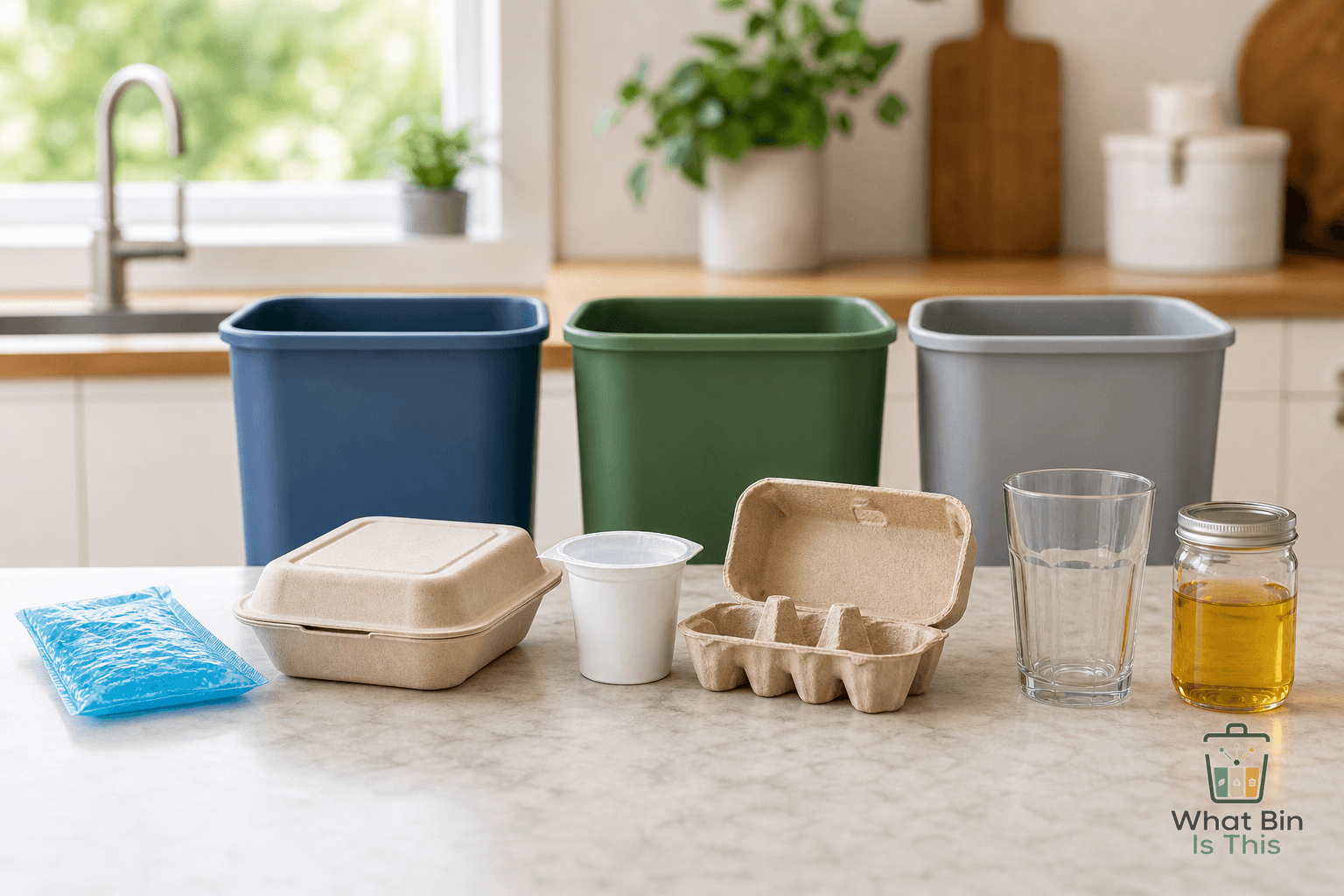
This weekly review covers the disposal traps that showed up across the newest guides: gel packs, glassware, grease, egg cartons, takeout containers, and yogurt cups. Use it as a quick scan before you dig into the full articles.
Item of the Week
Gel ice packs are one of those items that feel like they should have a special recycling answer. They arrive with meal kits, grocery deliveries, medicine shipments, pet food, and picnic supplies, then slowly take over the freezer.
The simple rule: do not put a full gel ice pack in curbside recycling. Most are mixed-material pouches filled with gel, which recycling facilities are not set up to sort as a normal plastic bottle, tub, or jar.
Better options:
- Reuse them for coolers, lunch bags, grocery runs, or emergencies.
- Check the package for disposal instructions, especially for medical or specialty shipments.
- Trash them if they are no longer usable and no specific take-back or disposal direction is given.
- Do not pour the gel down the drain unless the package clearly says that is allowed.
Read the full guide: Do gel ice packs go in trash or recycling?
Featured Guide
This week’s featured guide is about takeout containers, because they are a perfect example of why recycling rules can feel inconsistent.
A takeout container might be recyclable, trash, or compostable depending on the material, local rules, and how much food residue is still stuck to it. A clean plastic tub may be accepted in some programs. A greasy paper container may belong in the trash. A compostable container may only be useful if your area actually accepts it in a compost collection program.
The quick check:
- What is it made of? Plastic, paper, foam, aluminum, or compostable material?
- Is it empty and reasonably clean? Food and grease can turn a maybe-recyclable item into trash.
- Does your local program accept that shape and material? The recycling symbol alone is not enough.
Read the guide: Trash or recycling: takeout containers
Recycling Fact
Not all glass belongs in glass recycling.
Curbside glass recycling programs are usually designed for bottles and jars, not every glass object in the home. Drinking glasses, wine glasses, mugs, window glass, mirrors, and heat-resistant cookware can have different melting points or additives that make them a problem in bottle-and-jar recycling streams.
So if a drinking glass is chipped or broken, the safer default in many areas is trash, not recycling. If it is still usable, donation or reuse is usually better than tossing it.
Related guide: Can drinking glasses go in the recycling bin?
What's New
New articles from the past week focused heavily on everyday kitchen and household disposal questions:
- Do gel ice packs go in trash or recycling? — why most gel packs are trash after reuse, not curbside recycling.
- Can drinking glasses go in the recycling bin? — what to do with usable, chipped, and broken glassware.
- Can you pour cooking oil down the drain? — why grease and oil should usually stay out of sinks, toilets, and storm drains.
- Do egg cartons go in recycling? — how paper, plastic, and foam egg cartons can have different answers.
- Trash or recycling: takeout containers — how to sort containers by material, cleanliness, and local acceptance.
- Can you recycle yogurt cups? — why #5 plastic cups are accepted in some places but not everywhere.
A theme showed up across all of these: shape alone is not enough. The right bin often depends on material, residue, and your local program’s rules.
Question of the Week
If a package has a recycling symbol, does that mean it goes in my recycling bin?
Not always.
The recycling symbol can tell you something about the material, but it does not guarantee your local curbside program accepts that item. This is especially true for plastic tubs, foam containers, flexible plastic bags, compostable packaging, and mixed-material items.
A better decision process is:
- Check the item type: bottle, jar, tub, tray, pouch, bag, carton, or wrap.
- Check the material: paper, metal, glass, rigid plastic, foam, film plastic, or compostable material.
- Check condition: empty, clean, and dry is the usual standard for recycling.
- Check local rules: programs vary by city, hauler, and facility.
When in doubt, avoid wishcycling. A questionable item in the recycling bin can create problems for the items that actually are recyclable.
Check the right bin before you throw it away: What Bin Is This