
August 4, 2026
Do tea bags go in compost?
Tea leaves can usually be composted, but the bag is the tricky part. Here is when tea bags go in compost and when they belong in trash.
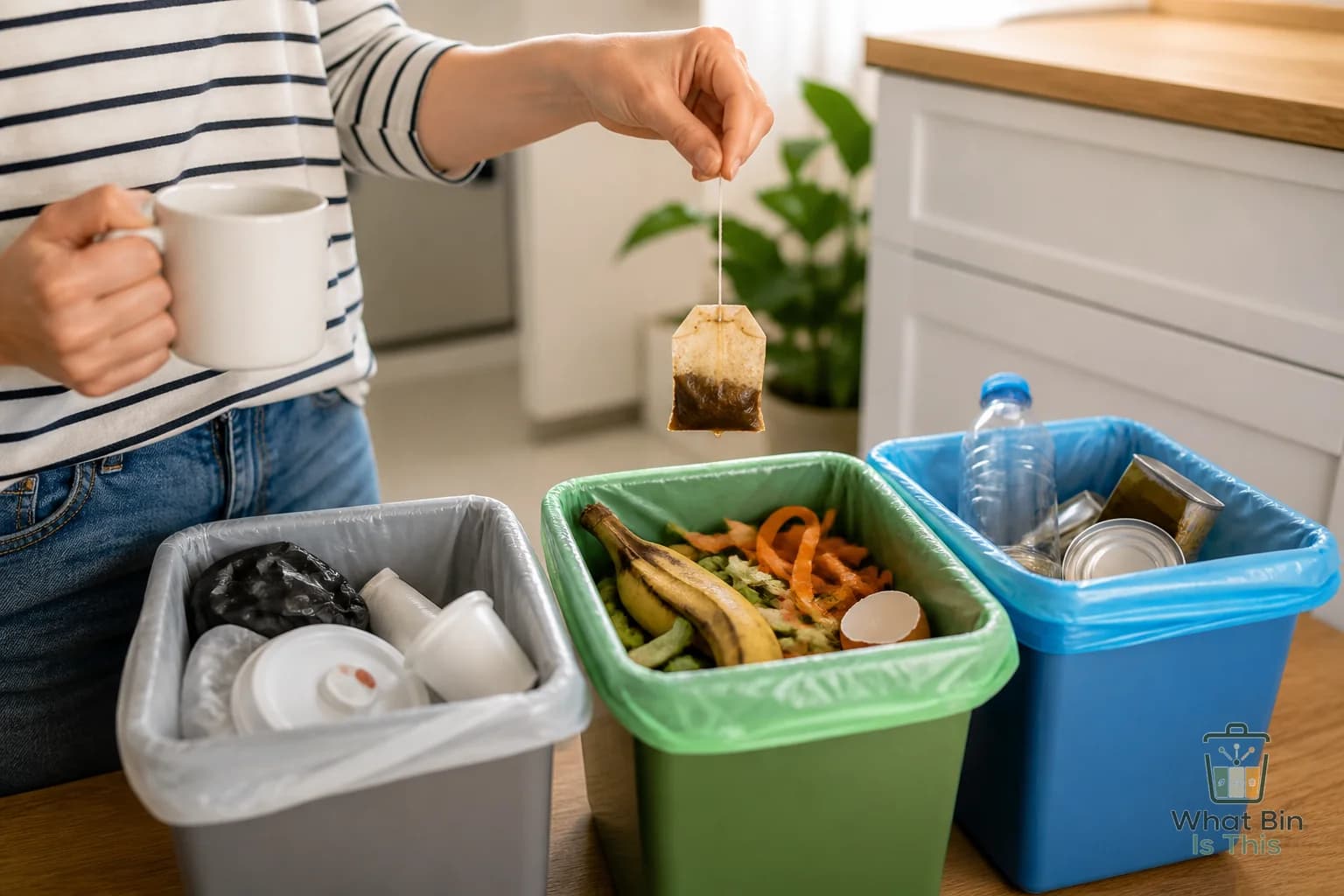
Tea feels like it should be an easy compost win. Leaves came from a plant, water did its thing, now the soggy little pouch is sitting by the sink waiting for a verdict.
The catch is the pouch.
Tea leaves are usually fine for compost. Tea bags are where the mystery starts, because some are paper, some are partly plastic, some are silky mesh, and some use adhesives or sealing materials that your compost program may not want.
Direct answer
The tea leaves themselves can usually go in compost.
The tea bag can go in compost only if it is made from accepted compostable paper or plant fiber and your local compost program allows it.
If you are not sure what the bag is made of, the safest move is simple: tear or cut it open, put the tea leaves in compost, and put the empty bag in the trash.
That sounds fussy until you realize the alternative is tossing a tiny plastic pouch into compost over and over because it looks harmless. It is the kind of household mistake that feels too small to matter, which is exactly why it spreads.
A quick rule:
- Loose tea leaves: compost
- Plain paper tea bags: often compost, if accepted locally
- Silky or mesh tea bags: usually trash unless clearly certified and accepted
- Tea bag wrappers: usually trash unless your local program says otherwise
- Staples, strings, and tags: remove if possible
If you already compost coffee grounds, the logic is similar: the food part is easy, the packaging is not. See Do coffee grounds go in compost? for the coffee version of the same kitchen debate.
Why the answer is not obvious
Tea bags look natural. Many are brown or off white. Some brands even use earthy packaging language that makes the whole thing feel compost ready.
But “looks like paper” is not the same as “breaks down cleanly in your compost bin.”
Some tea bags are heat sealed with plastic. Some are made from nylon, PET, or other synthetic mesh. Some are marketed as plant based or biodegradable, which still does not automatically mean your curbside compost program wants them.
Backyard compost and municipal compost are also not the same setup. A commercial composting facility may reach conditions your backyard pile never will. On the other hand, your local curbside program may reject items that technically break down because they are too hard to sort or too commonly confused with trash.
So the tea leaves are the boring part. The bag is the decision.
Common mistakes
Tossing every tea bag into compost
This is the big one. A soggy tea bag feels like food waste, but the bag may not be food waste. If it has a shiny mesh texture, a plastic feel, or a sealed edge that does not tear like paper, do not assume it belongs in compost.
Trusting vague packaging words
“Biodegradable,” “natural,” and “plant based” do not always mean “accepted in your curbside compost bin.” Compost programs care about what they can process, not just what a package claims under ideal conditions.
This is the same trap people run into with compostable forks, cups, and containers. If you want the packaging side of that rabbit hole, read Can compostable packaging go in curbside compost?.
Composting the wrapper by habit
Individually wrapped tea bags are common, especially for herbal teas and office break rooms. Those wrappers may be paper, plastic lined paper, foil lined material, or mixed packaging. Unless your local program clearly accepts that wrapper, put it in the trash.
Ignoring the tag and staple
A tiny paper tag is not the end of the world, but it is still not tea. If removal is easy, remove it. Staples should not go in backyard compost. Some curbside programs can screen out small bits, but that does not mean you should feed them extra work.
Assuming “home compostable” means curbside compostable
This one trips people up because it sounds backward. A product may be labeled for home composting, but your curbside program may still reject it. Local rules are built around collection, sorting, contamination risk, and facility contracts. The label is only one part of the answer.
Simple checklist
Before you drop a tea bag into compost, run this quick check:
- Is it loose tea with no bag? Compost it.
- Is the bag clearly plain paper and accepted by your local program? Compost it.
- Does the bag feel silky, stretchy, plastic like, or mesh? Trash the bag.
- Is there a staple, string, or tag? Remove what you can.
- Is the tea bag individually wrapped? Trash the wrapper unless accepted locally.
- Not sure what the bag is made of? Compost the leaves, trash the bag.
That last line is the household peace treaty. You still compost the useful part without gambling on the mystery pouch.
Local rule caveat
Compost rules are local. Some cities accept tea bags. Some accept only loose food scraps. Some accept certified compostable items, but only specific types. Some do not offer curbside compost at all.
If you use a backyard compost bin, you control the standard. Many people compost tea leaves and plain paper bags without trouble, but synthetic bags and plastic sealed bags are still a bad fit. If something remains stringy, shiny, or intact after composting, that is your pile giving you a very slow review.
If you use a curbside green bin, check your city or hauler’s accepted items list. Search for “tea bags,” “food scraps,” or “compostable bags.” If tea bags are not mentioned, do not treat silence as permission.
Practical takeaway
Tea leaves go in compost. Tea bags are conditional.
If the bag is plain paper and your local compost rules allow it, compost it. If the bag is silky, mesh, plastic feeling, sealed with mystery material, or individually wrapped in mixed packaging, do not overthink it. Open the bag, compost the leaves, and trash the rest.
That one small habit keeps your compost decision clean without turning tea time into a materials science seminar.
Still staring at a weird household item and trying to avoid the classic “eh, recycling?” toss? Look it up with What Bin Is This.