
August 6, 2026
Do meat and bones go in compost?
Meat and bones usually do not belong in backyard compost. Some city food scrap programs accept them, but you need to check your local rule first.
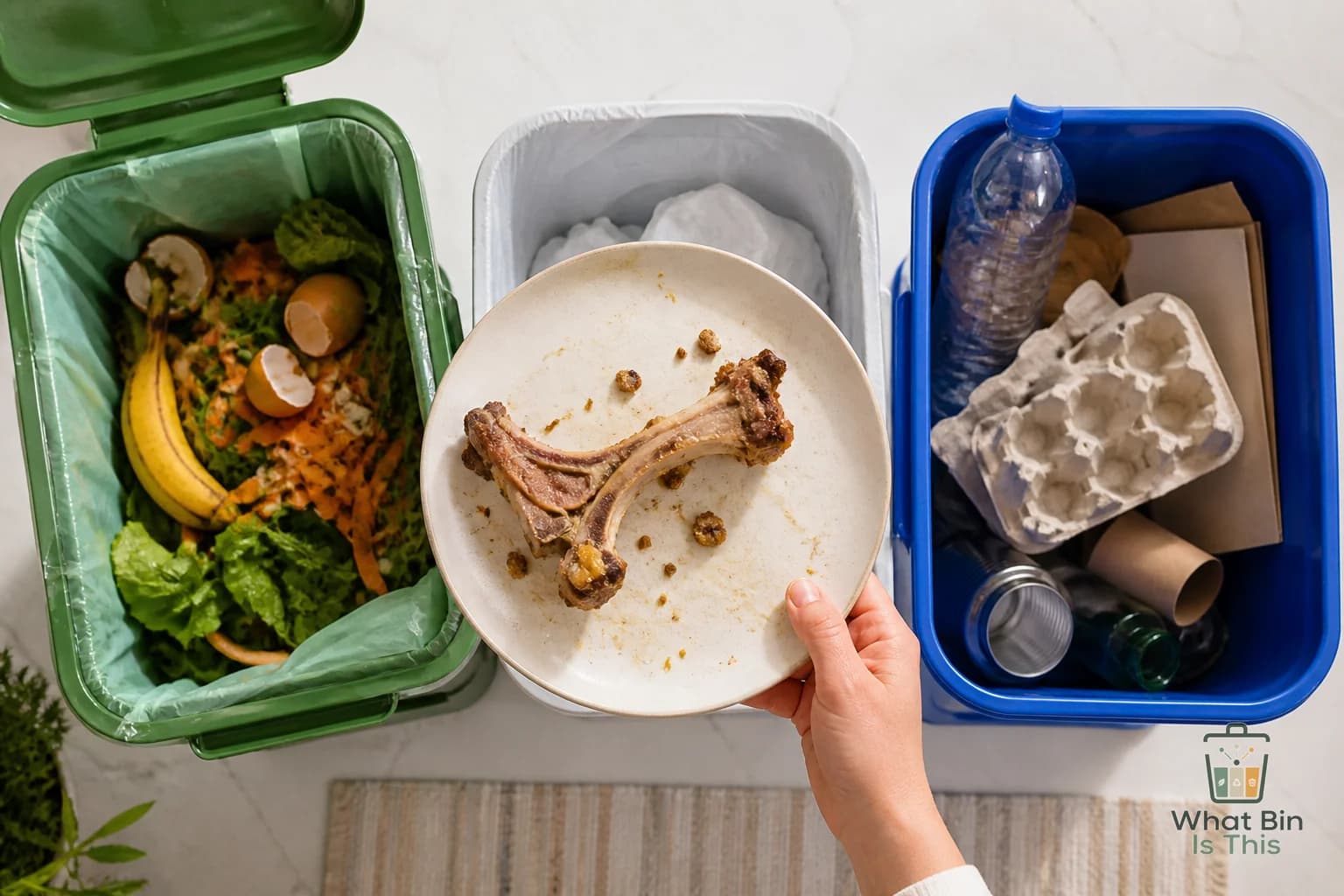
You are scraping dinner plates, holding a chicken bone, a strip of fat, or a weird little pile of meat scraps, and the compost bin is staring at you like it wants to be helpful.
Not so fast.
Meat and bones are one of those compost items where the answer changes depending on the kind of compost system you mean. Backyard compost pile? Usually no. Curbside food scrap cart? Maybe. Regular trash? Often the safest default if you cannot confirm the rule.
The direct answer
Meat and bones usually should not go in a backyard compost pile or small home compost bin.
They can attract pests, smell bad, break down slowly, and throw off a small compost system. Bones are especially stubborn. A carrot peel knows what it is doing in compost. A pork chop bone is planning to be there for a while.
For curbside compost or food scrap collection, the answer depends on your local program. Some municipal composting programs accept meat, bones, fish, shells, and dairy because they use commercial composting systems that can handle higher temperatures and tighter process controls. Other programs ban them because of odor, contamination, pests, or facility rules.
So the quick household rule is:
- Backyard compost: no meat, no bones
- Curbside food scraps: only if your local program specifically accepts them
- If you cannot check: put them in the trash
That is not glamorous, but it keeps your bin from becoming a raccoon invitation.
Why this answer is not obvious
People hear “food scraps” and assume all food scraps are compostable. That sounds reasonable. Meat is food. Bones came from food. Why would apple cores be fine but chicken bones be a problem?
The difference is not whether the item is natural. The difference is whether your compost system can break it down cleanly without creating a mess.
Fruit and vegetable scraps break down fairly easily in home compost. Coffee grounds, leafy greens, peels, and stems are ordinary compost material. Meat behaves differently. It can rot before it composts, especially in a small bin that does not get hot enough. Fat and grease can coat material, slow airflow, and create odors. Bones may technically break down over a very long time, but not on the timeline most households expect from compost.
Commercial composting is a different animal. Some facilities are built to handle tougher food waste. They may process material at higher heat, grind it, monitor it, or manage it in ways your backyard pile cannot. That is why one city may say yes to bones and the next city may say no.
Same item. Different system. Different answer.
Common mistakes
The biggest mistake is treating the green bin like a magic disposal portal. Compost is not just “trash, but nicer.” It has rules.
Common meat and bone mistakes include:
- Tossing chicken bones into backyard compost
- Adding bacon grease, pan drippings, or meat fat to compost
- Assuming “food waste” means every food item is accepted
- Putting spoiled meat in a countertop compost pail for days
- Using compostable bags that your program does not accept
- Adding bones because they seem “natural”
Small amounts can still cause problems. One fish skin or chicken carcass in a warm garage bin can make itself known fast. The smell is not subtle. It does not politely wait until pickup day.
Also watch the sauce problem. A vegetable dish covered in meat grease, cheese, or heavy sauce may not be treated the same as plain vegetable scraps in stricter programs. Scrape what you can, then follow your local food scrap instructions.
Cooking oil and grease are their own disposal trap. They do not belong down the sink, and they usually do not belong in compost either. If you are cleaning up after a meal, read Can you pour cooking oil down the drain? before the pan becomes tomorrow's plumbing problem.
Check the local rule before you toss it
Local rules matter a lot for meat and bones.
Look for the exact wording from your city, hauler, county, or transfer station. The terms may be different depending on where you live. Search for phrases like:
- Food scraps accepted
- Green cart rules
- Organics collection
- Curbside compost accepted items
- Meat bones dairy compost
- Food waste drop off rules
If the rule says “fruit and vegetable scraps only,” do not add meat or bones.
If the rule says “all food scraps, including meat and bones,” then your local program likely has a system that can handle them. Even then, follow the instructions on liners, bags, wrapping, and pickup storage. Some programs want scraps loose. Some allow paper bags. Some allow certified compostable bags. Some do not want any bag at all.
Do not copy the rule from another city. Compost programs are not standardized. Your cousin's green bin in another state is not a legal document.
Simple checklist
Use this when you are standing at the counter with something questionable:
- Is it plain fruit or vegetable scrap? Compost is usually fine.
- Is it meat, fish, poultry, or skin? Backyard compost says no.
- Is it a bone, shell, or carcass? Backyard compost says no.
- Is it greasy, oily, or fatty? Keep it out of home compost.
- Does your curbside program clearly accept meat and bones? Use the food scrap bin if yes.
- Are you unsure? Trash is the safer default.
- Is it going to sit indoors and smell? Bag it, freeze it until pickup, or use the trash, depending on local rules.
The freezer trick is useful if your city accepts meat scraps but your pickup is not for a few days. Put scraps in a container or bag allowed by your program, freeze them, then move them to the cart close to collection day. Not elegant. Very effective.
Practical takeaway
Meat and bones are not automatic compost items.
For home compost, keep them out. For curbside food scrap programs, check the local accepted list. If your program clearly says meat and bones are accepted, follow its instructions. If it does not say yes, do not guess.
The boring answer saves you from the exciting version, which involves smells, pests, and a bin you suddenly do not want to open.
Need a fast second opinion before you toss something? Try What Bin Is This and check the item before it becomes bin drama.