
August 5, 2026
Do eggshells go in compost?
Eggshells can usually go in compost, but they break down slowly. Crush them first, skip loose raw egg, and check curbside compost rules.
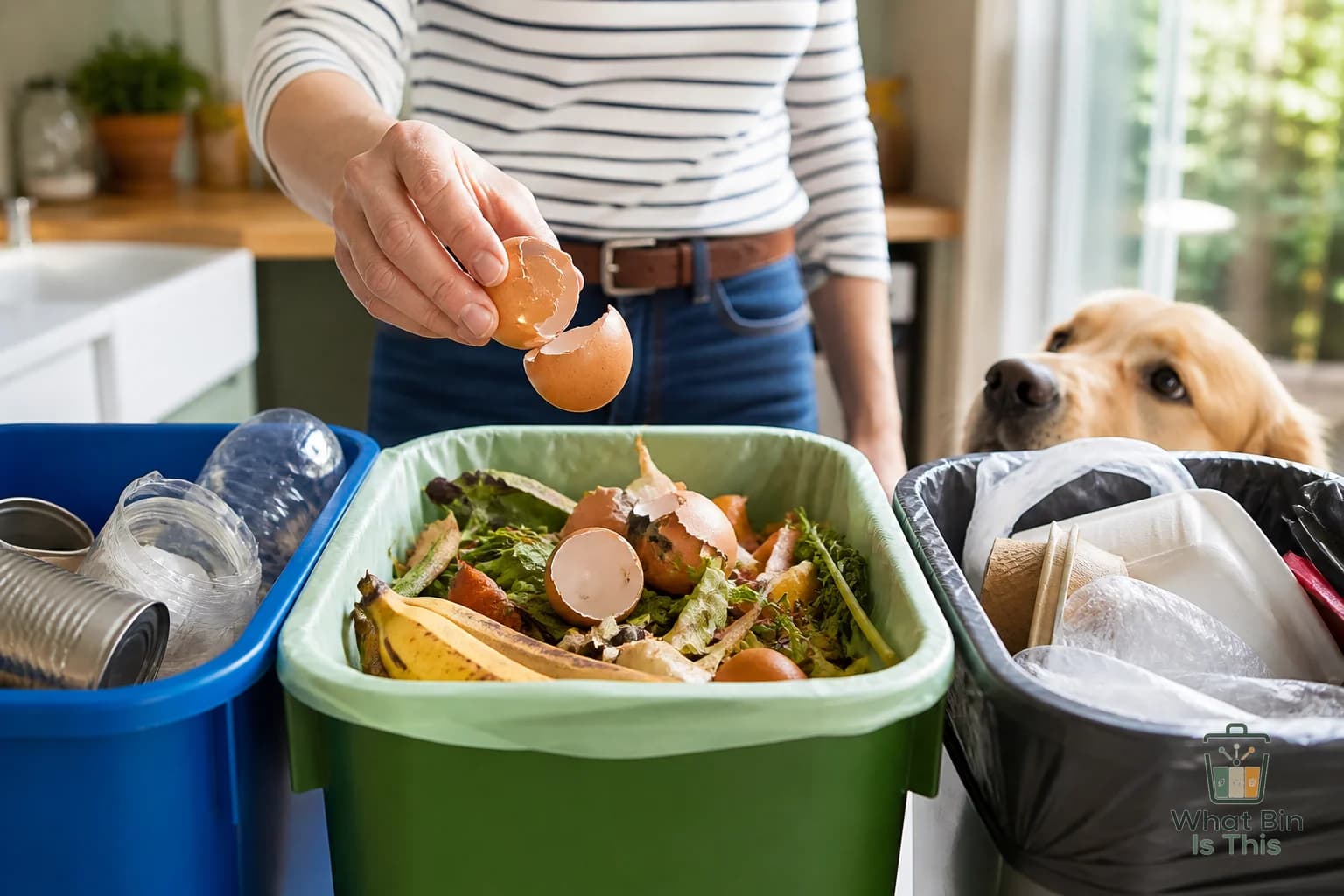
Eggshells look like an easy compost win. They came from food, they are dry, and they do not have the obvious stink factor of meat scraps or old dairy.
Still, they create a weird little kitchen pause. Do they actually break down? Do they count as food waste? Are they allowed in the green bin if your city has curbside compost?
If you are holding a cracked shell over the counter, the answer is usually yes, but there are a few details worth getting right.
Direct answer
Yes, eggshells can usually go in compost.
For backyard compost, eggshells are generally fine. They add calcium and do not create the same odor problem as cooked food, meat, or dairy. The catch is speed. Eggshells break down slowly, especially if you toss them in as large curved halves.
For curbside compost, it depends on your local program. Many food scrap programs accept eggshells, but some programs draw tighter lines around animal products or messy food residue. If your local rules say eggshells are accepted, put them in the compost cart. If your rules say no eggs or no animal products, trash them.
Eggshells do not belong in the recycling bin. They are not packaging, paper, metal, glass, or plastic. Recycling does not need breakfast confetti.
Why the answer is not obvious
Eggshells sit in a strange category. They are food related, but they are not soft food scraps like banana peels or apple cores. They are mostly calcium carbonate, which is closer to a mineral than a vegetable peel.
That is why you may still see little white shell pieces in finished backyard compost. It does not mean you ruined the pile. It usually means the shells were too large to disappear quickly.
The other confusion is the egg residue. A clean, cracked shell is one thing. A leaking raw egg, a spoiled egg, or a bowl of scrambled egg leftovers is different. Those can smell, attract pests, and may be excluded by some compost programs. The shell is the easy part. The goo is where people get sloppy.
Curbside compost adds one more twist. City programs are designed around what their processing site can handle. A hot commercial composting operation may allow things a backyard pile should avoid. Another program may keep the accepted list narrow so carts stay cleaner and contamination stays lower.
Common mistakes
The biggest mistake is tossing whole shell halves into backyard compost and expecting them to vanish fast. They probably will not. Crush them in your hand, press them with the bottom of a cup, or let them dry and crumble them before adding them to the pile.
Another mistake is treating the egg carton and the eggshells as the same disposal decision. They are not. Paper egg cartons may be recyclable or compostable depending on condition and local rules, while foam and plastic cartons are a different story. If you are sorting the whole breakfast cleanup, see Do egg cartons go in recycling?.
People also overthink washing. You do not need to scrub every shell like it is going into a museum case. If there is a lot of raw egg left, scrape it out or let the shell dry before composting. A tiny bit of residue is usually not the issue.
And yes, some people put eggshells in recycling because they are hard and pale and vaguely shell like. Do not do that. Recycling facilities sort containers and materials, not kitchen scraps.
Local rule caveat
Backyard compost and curbside compost are not the same system.
In a backyard bin, you control the pile. Crushed eggshells are usually fine, but they break down slowly and should be mixed with other compost materials. Do not build a weird nest of shells in one corner and call it composting. Spread them out.
In curbside compost, follow the accepted list from your city, hauler, or apartment building. If the list says food scraps and includes eggshells, you are good. If it says no eggs, no animal products, or yard waste only, keep them out.
This is the same local rule problem that trips people up with packaging labeled compostable. The label does not always match the bin. If that is the item in your hand, use Can compostable packaging go in curbside compost? before tossing it.
Practical takeaway
Eggshells are compostable, but they are slow and a little annoying. Crush them, keep big raw egg messes out, and check the curbside list if you are using a green cart.
Simple checklist:
- Empty the shell as much as practical.
- Crush large pieces before composting.
- Use backyard compost if you have it.
- Use curbside compost only if your local program accepts eggshells.
- Keep eggshells out of recycling.
- Trash them if you do not have compost access or your program excludes them.
The low drama answer: crushed eggshells in compost, not recycling. If your local compost rules are unclear, do not guess based on vibes from the carton.
Need a quick check for the thing in your hand? Try What Bin Is This before it becomes another mystery item hovering over the kitchen trash.