
August 3, 2026
Shredded paper recycling: loose, bagged, compost, or trash?
Shredded paper usually should not go loose in curbside recycling. Check your local rules before bagging it, composting it, or tossing it.
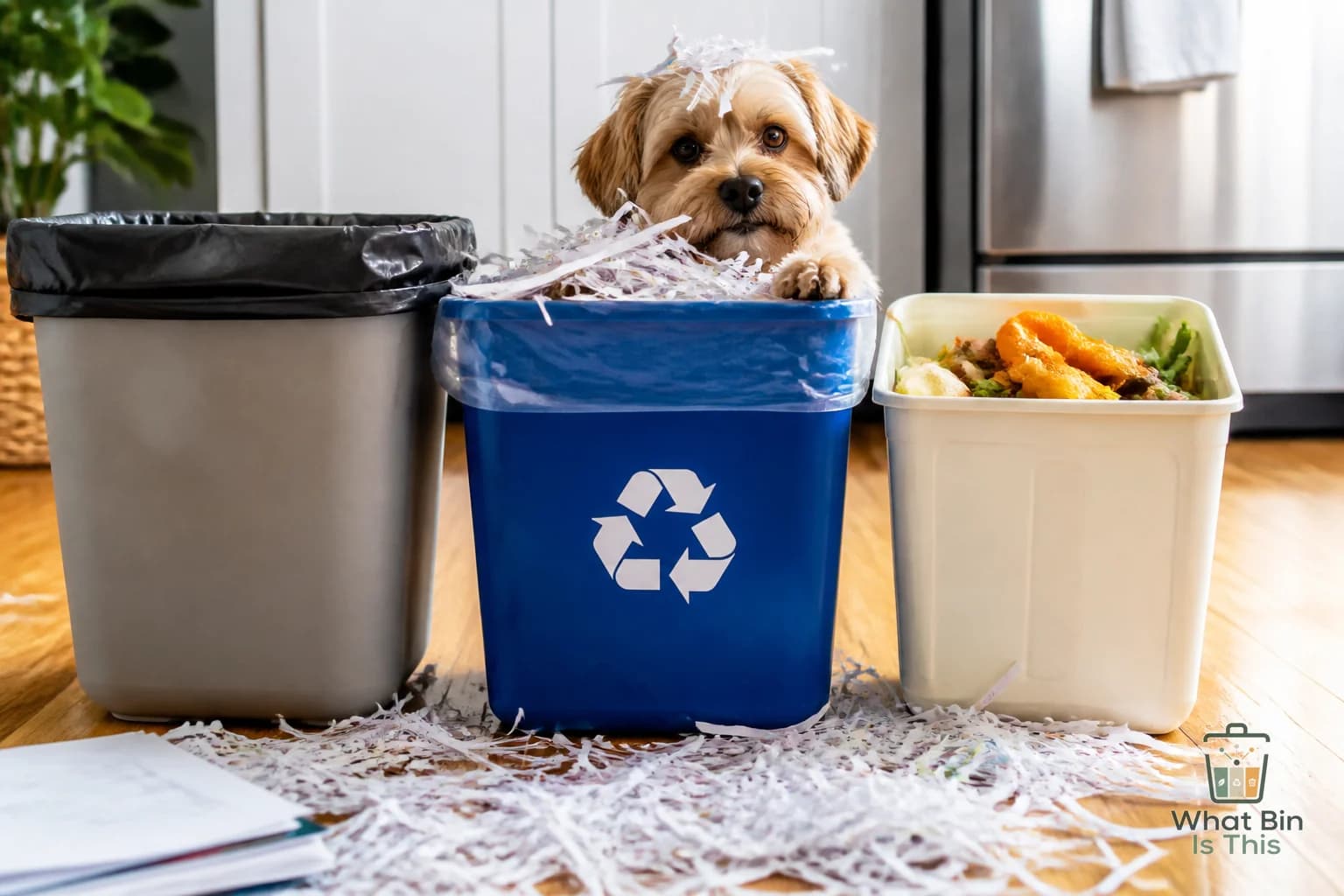
Shredded paper feels like it should be an easy recycling win. It is paper. It came from paper. It still looks like paper, just angrier and harder to clean up.
But in a lot of curbside programs, shredded paper is one of those items that creates more sorting trouble than people expect. The right answer depends on how your local program handles loose small paper, bagged paper, and secure document shredding.
Direct answer
Do not put shredded paper loose in your recycling bin unless your local recycling program specifically says to do that.
In many places, loose shredded paper is not accepted in curbside recycling because the pieces are too small for sorting equipment. They can fall through screens, stick to other materials, blow around the facility, or end up as contamination in the wrong stream.
Your better options are usually:
- Use a local secure shredding event or document destruction service that recycles the paper afterward.
- Follow your city’s instructions if it accepts shredded paper in a paper bag or clear bag.
- Compost small amounts of plain shredded office paper if your compost setup or local compost program allows it.
- Put it in the trash if none of those options fit.
That last one feels wrong, but “paper” is not the only question. Size, cleanliness, and sorting behavior matter too.
Why the answer is not obvious
Most recycling advice starts with material type: paper, plastic, metal, glass. Shredded paper breaks that shortcut.
A whole sheet of office paper is easy for a sorting facility to recognize and separate. A pile of skinny strips is a different animal. It behaves more like confetti than a recyclable sheet.
That creates a few problems:
- The shreds are too small for some sorting screens.
- They can cling to cans, bottles, and containers.
- They can blow around during collection or unloading.
- Bagged shredded paper may be rejected if bags are not allowed.
- Very short paper fibers may be less useful for making new paper.
This is why one city may say “place shredded paper in a paper bag,” while another says “no shredded paper in curbside recycling.” Both can be true in their own systems.
If you are also sorting other paper-like items, the same local-rule problem shows up with things like Can you recycle paper plates? and Can you recycle frozen food boxes?. The material looks familiar, but coatings, food, and sorting rules change the answer.
Common mistakes
The biggest mistake is dumping a full bag of loose shreds into the recycling cart and hoping the recycling facility appreciates the gesture. It probably will not.
A few other common misfires:
Putting shreds in a plastic bag. Many curbside programs do not want bagged recyclables at all. A plastic bag full of shredded paper may be treated as trash because workers and machines cannot safely or efficiently sort mystery bags.
Assuming “paper bag” is always accepted. Some programs ask for shredded paper in a paper bag stapled shut. Others do not want shredded paper in any form. The bag trick is local, not universal.
Recycling glossy receipts or thermal paper. Receipts are often not ordinary office paper. If you shredded a stack of receipts, do not assume they belong in recycling or compost.
Composting too much at once. Plain shredded paper can help balance wet food scraps in a backyard compost pile, but a giant clump can mat together and slow things down. Add it in small amounts and mix it well.
Shredding everything before checking options. If you have boxes of old documents, a community shredding event may be cleaner and easier than feeding your home shredder for three hours while questioning your life choices.
Local-rule caveat
Shredded paper rules are very local. They depend on your hauler, sorting facility, collection method, and whether your area has special paper recovery instructions.
Look for wording like:
- “Shredded paper accepted in paper bags”
- “No shredded paper in curbside recycling”
- “Take shredded paper to a drop-off site”
- “Use secure shredding events”
- “Do not bag recyclables”
If your local guide says shredded paper is accepted only when contained a certain way, follow that exactly. If it says loose recyclables only, do not sneak in a plastic bag of shreds. That is how a decent intention becomes a sorting problem.
Also separate sensitive documents from ordinary paper. If the paper includes financial, medical, legal, or identity information, a secure shredding service may be the better move. Many of those services recycle the paper after destruction, but you should check before assuming.
Simple checklist
Before you choose a bin, ask:
- Is it plain office paper, not glossy receipts or coated paper?
- Does my local curbside program accept shredded paper?
- If yes, does it require a paper bag, clear bag, or drop-off location?
- If no, do I have access to a secure shredding event?
- Can I compost a small amount in a backyard compost pile?
- If none of those apply, should it go in the trash?
Quick sort:
- Accepted by local program: follow the exact containment rule.
- Secure documents: use a shredding event or document destruction service if available.
- Plain paper in small amounts: compost only if allowed and practical.
- Unknown or not accepted: trash is safer than contaminating the recycling bin.
Practical takeaway
Shredded paper is not automatically curbside recyclable just because it started as paper. The small pieces are the problem.
If your city gives a specific instruction, follow it. If it does not, keep loose shreds out of the recycling bin. Use a secure shredding option, compost small amounts of plain paper where allowed, or put it in the trash.
When in doubt, check the exact item before you toss it. What Bin Is This can help you make the call without turning your kitchen into a tiny waste policy office.