

July 30, 2026
Can you recycle plastic utensils?
Plastic forks, knives, and spoons usually do not belong in curbside recycling. Here is what to do with them instead.
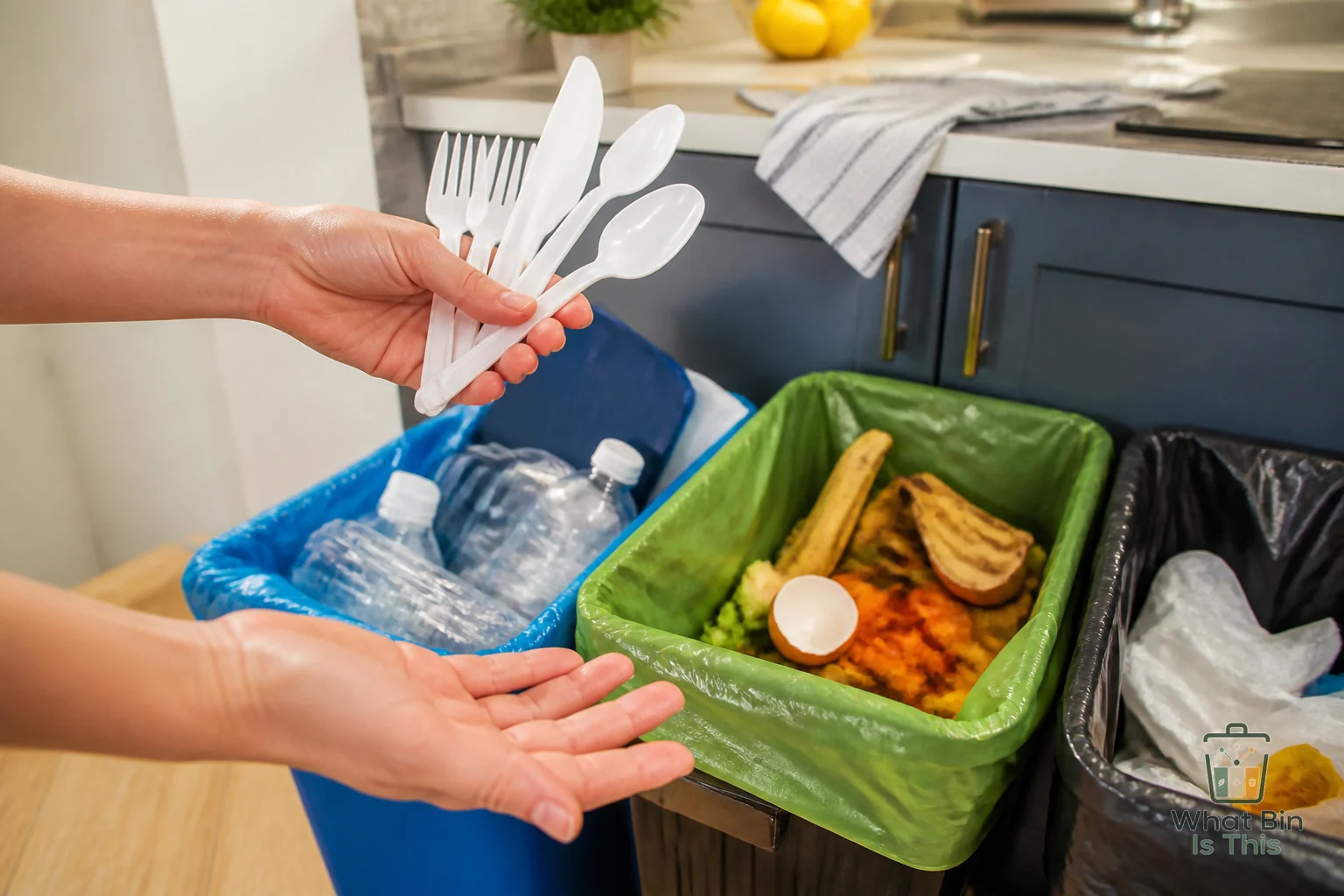
Plastic utensils feel like they should be recyclable. They are plastic, they are often clean enough, and they sometimes even have a tiny recycling symbol stamped somewhere on the handle.
That does not mean your curbside bin wants them.
Most plastic forks, knives, and spoons are a bad fit for regular recycling systems. They are small, lightweight, oddly shaped, and often made from plastic types that local programs do not sort well. The result is simple: unless your city or hauler clearly says plastic utensils are accepted, put them in the trash.
Direct answer
Plastic utensils usually go in the trash, not the recycling bin.
So if the exact question is "can you recycle plastic utensils?", the practical answer is usually no for curbside recycling. Treat disposable cutlery as trash unless your local recycling guide clearly names plastic utensils as accepted.
That includes:
- Plastic forks
- Plastic knives
- Plastic spoons
- Plastic sporks
- Disposable tasting spoons
- Cutlery from takeout bags
- Loose utensils from party packs
There are a few exceptions. Some drop off programs or specialty recyclers may accept certain rigid plastics. A few local curbside programs may allow plastic utensils if they are clean and grouped with other accepted plastics. But that is not the default.
If you are standing over the bin with one fork in your hand, the safe household move is trash.
If the utensil is unused and still wrapped, consider saving it for lunches, picnics, travel, or a future party before throwing it away. But do not toss it into recycling just because it feels wasteful to trash it.
Why this is not obvious
Plastic utensils cause confusion because they look recyclable in a very normal way. They are rigid plastic, not film. They are not obviously gross like a used napkin. Some even show resin numbers.
The problem is that recycling is not just about material. It is also about shape, size, sorting, and market demand.
Plastic utensils are often too small and flat for recycling equipment to handle cleanly. They can fall through sorting screens, ride along with paper, or end up mixed with materials they do not belong with. A facility built to sort bottles, tubs, jugs, and jars is not automatically set up to recover thousands of loose plastic forks.
There is also the mixed plastic issue. Disposable cutlery may be made from polystyrene, polypropylene, compostable plastic, or other materials that look similar at a glance. A recycling symbol or resin number does not guarantee your local program can sell or process that item.
That is the part people get wrong: the symbol is not a permission slip. It is a material identifier.
For more on why the wrong item can create trouble in the bin, see What counts as recycling contamination?.
Common mistakes
The most common mistake is tossing plastic utensils into recycling because they came with other recyclable takeout packaging.
Takeout creates a messy little decision tree. The paper bag might be recyclable. The clean cardboard drink carrier might be recyclable. The container might depend on material and food residue. The sauce cup may be trash. The fork is usually trash.
One meal can produce five different disposal answers, which is rude but true.
If you are sorting the rest of the order too, this guide may help: Trash or recycling: takeout containers.
Other common mistakes:
- Assuming all numbered plastics are recyclable curbside
- Recycling black plastic utensils because they look clean
- Recycling compostable utensils with regular plastic
- Tossing food covered utensils into recycling
- Bagging utensils together and putting the bag in the recycling bin
- Mixing plastic cutlery into paper party plates and cups
Black plastic cutlery can be especially tricky. Some sorting systems struggle to detect black plastics, and many programs do not want them in curbside recycling. Again, local rules decide, but trash is usually the safer answer.
Compostable utensils are their own separate headache. They are not regular plastic recycling. They also do not automatically belong in a backyard compost pile or curbside compost cart. Many need commercial composting conditions, and many compost programs do not accept them because they are hard to distinguish from regular plastic.
So if the fork says compostable, do not put it in recycling. Check whether your compost program accepts compostable serviceware. If not, trash it.
Simple checklist
Use this quick check before deciding:
- Is it a disposable plastic fork, knife, spoon, or spork? Usually trash.
- Is it clean but loose and small? Still usually trash.
- Is it marked with a recycling number? Check local rules, but do not assume yes.
- Is it compostable plastic? Not recycling. Compost only if your program accepts it.
- Is it covered in food, sauce, or grease? Trash.
- Is it unused and still wrapped? Save and use it later if you can.
- Does your city specifically accept plastic utensils? Follow that rule.
When in doubt, keep it out of recycling. One plastic fork is not worth contaminating a batch of otherwise sortable material.
Local rules can change the answer
Recycling rules vary by city because facilities, contracts, sorting equipment, and end markets vary. Two towns can accept the same plastic bottle but disagree on plastic cutlery.
That is annoying, but it is not random. Recycling programs are built around what they can reliably collect, sort, and move to a buyer. Plastic utensils are often too low value and too awkward to make the cut.
Your local waste department or hauler is the final source. Look for wording like “plastic utensils,” “plastic cutlery,” “rigid plastics,” or “takeout cutlery.” If the rule does not clearly say yes, do not treat it as yes.
Also watch for special event rules. Some venues, cafeterias, or campuses collect specific compostable utensils because they control the whole waste stream. That does not mean the same fork belongs in your curbside cart at home.
Practical takeaway
Plastic utensils are usually trash.
Save unused ones if you will actually use them. Skip them with takeout orders when you do not need them. But when a used plastic fork is already in your kitchen, do not overthink it into the recycling bin.
The better recycling move is boring: keep bottles, cans, jars, and accepted containers clean and loose, and leave mystery items out.
Need a quick second opinion before you toss something? Try What Bin Is This and check the item before it becomes another tiny kitchen debate.