
August 1, 2026
Pizza box recycling: clean lid, greasy bottom, or compost?
Sort pizza boxes by condition: clean cardboard can often be recycled, while greasy bottoms usually belong in trash or accepted compost.
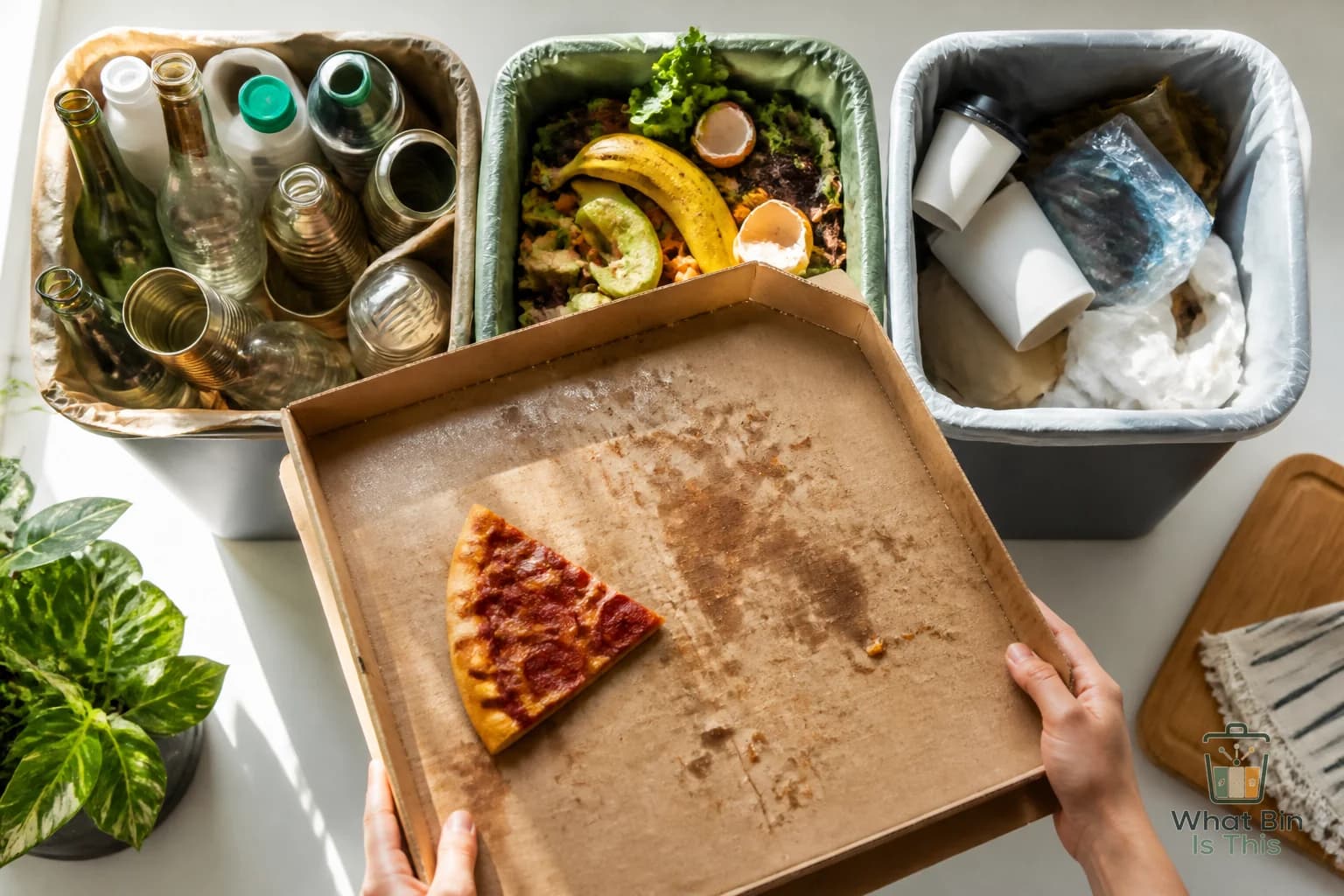
Pizza box recycling feels like it should be easy. They are cardboard. Cardboard goes in recycling. Case closed, right?
Not quite. Pizza boxes are one of those household items where the material and the mess fight each other. The clean lid may be perfectly fine for recycling, while the greasy bottom is doing its best impression of a trash item.
The direct answer
You can usually recycle the clean parts of a pizza box.
That means dry cardboard with little or no grease, cheese, sauce, or stuck food. The clean lid is often recyclable. A clean side panel is often recyclable too. If the bottom of the box is soaked with oil or has melted cheese welded to it, keep that part out of the recycling bin.
The easiest move is to tear the box in half:
- Clean lid: recycling
- Greasy bottom: trash, or compost if your local program accepts food soiled cardboard
- Plastic table, sauce cups, liners, or leftover crusts: not recycling
Some recycling programs accept pizza boxes with light grease. Some do not. Heavy grease and food are still the part that causes trouble.
Why the answer is not obvious
Pizza boxes confuse people because both answers sound reasonable.
Yes, a pizza box is usually corrugated cardboard. Recycling programs like clean cardboard because it can be pulped and made into new paper products.
But grease is different from a bit of dust or a shipping label. Oil can spread through paper fibers. Food scraps can attract pests, create odor, and make a load harder to sort. A box with a few translucent grease spots is not the same as a box with a cheese layer, ranch spill, and three abandoned pepperoni slices.
People also hear different advice from different places. One city says pizza boxes are fine if empty. Another says greasy cardboard is trash. A compost program may want the dirty cardboard, while a recycling program may reject it. That is not you being bad at trash. That is the local system being oddly specific.
For a deeper look at what sorters are trying to avoid, see What counts as recycling contamination?.
Common mistakes
The big mistake is treating the whole box as one item.
If the lid is clean and the bottom is greasy, do not sacrifice the clean part just because the bottom lost a fight with mozzarella. Tear it apart. Recycle the clean cardboard and deal with the dirty section separately.
Another mistake is leaving food inside. Empty the box first. Crusts, napkins, foil packets, dipping sauce cups, pizza savers, and little plastic containers do not belong in the paper recycling stream.
A third mistake is flattening the box without checking it. Flattening is good for saving bin space, but it can hide food and liners. A flattened box with cheese stuck inside is still a problem.
Also watch for coated or unusual boxes. Most standard delivery boxes are cardboard, but some takeout packaging has waxy coatings, glossy coatings, or plastic liners. If it feels slick and does not tear like normal cardboard, your local rules may treat it differently.
Food stained paper is a recurring source of bad guesses. Paper plates create a similar problem when they are greasy or coated. If you are sorting party cleanup, this guide may help too: Can you recycle paper plates?.
Simple pizza box checklist
Before you toss the box, run through this quick check:
- Is the cardboard mostly clean and dry?
- Are there no chunks of food stuck to it?
- Is there no heavy grease soaking through?
- Have you removed sauce cups, liners, napkins, and plastic pieces?
- Can you tear off a clean lid or side panel from a dirty bottom?
- Does your city accept pizza boxes in recycling?
- If compost is available, does it accept food soiled cardboard?
If the clean answer is yes, recycle that part. If the answer is no, keep that part out of recycling.
Local rules still get final say
Pizza boxes are a perfect example of why recycling labels can be annoying. The object looks the same from kitchen to kitchen, but the answer can change by city, hauler, sorting facility, and compost access.
Some curbside recycling programs now say empty pizza boxes are acceptable, even with light grease. Others still ask residents to remove greasy sections. Compost programs may accept the food soiled cardboard, but only if the compost facility is set up for it. Backyard compost is its own thing and usually works better with small amounts of plain, uncoated cardboard than with a stack of oily delivery boxes.
So if your local guide gives a specific pizza box rule, use that over any general advice. When you do not have a local answer, the safer default is simple: recycle only the clean cardboard and keep food soaked cardboard out.
Practical takeaway
Do not overthink the whole box. Split it by condition.
Clean cardboard belongs in recycling in many places. Greasy, cheesy, wet, or food covered cardboard does not belong in the recycling bin unless your local program clearly says it accepts it. Trash is better than contaminating a batch. Compost may be an option, but only where food soiled cardboard is accepted.
The fast kitchen move: open the box, remove the leftovers, tear off the clean lid, recycle that, and toss or compost the dirty bottom according to your local rules.
Still staring at something weird by the bin? Check it with What Bin Is This.