

July 29, 2026
Can you recycle glass jars and bottles?
Most glass food jars and drink bottles can go in recycling, but only if your local program accepts glass container glass. Keep drinking glasses, mirrors, and broken glass out.
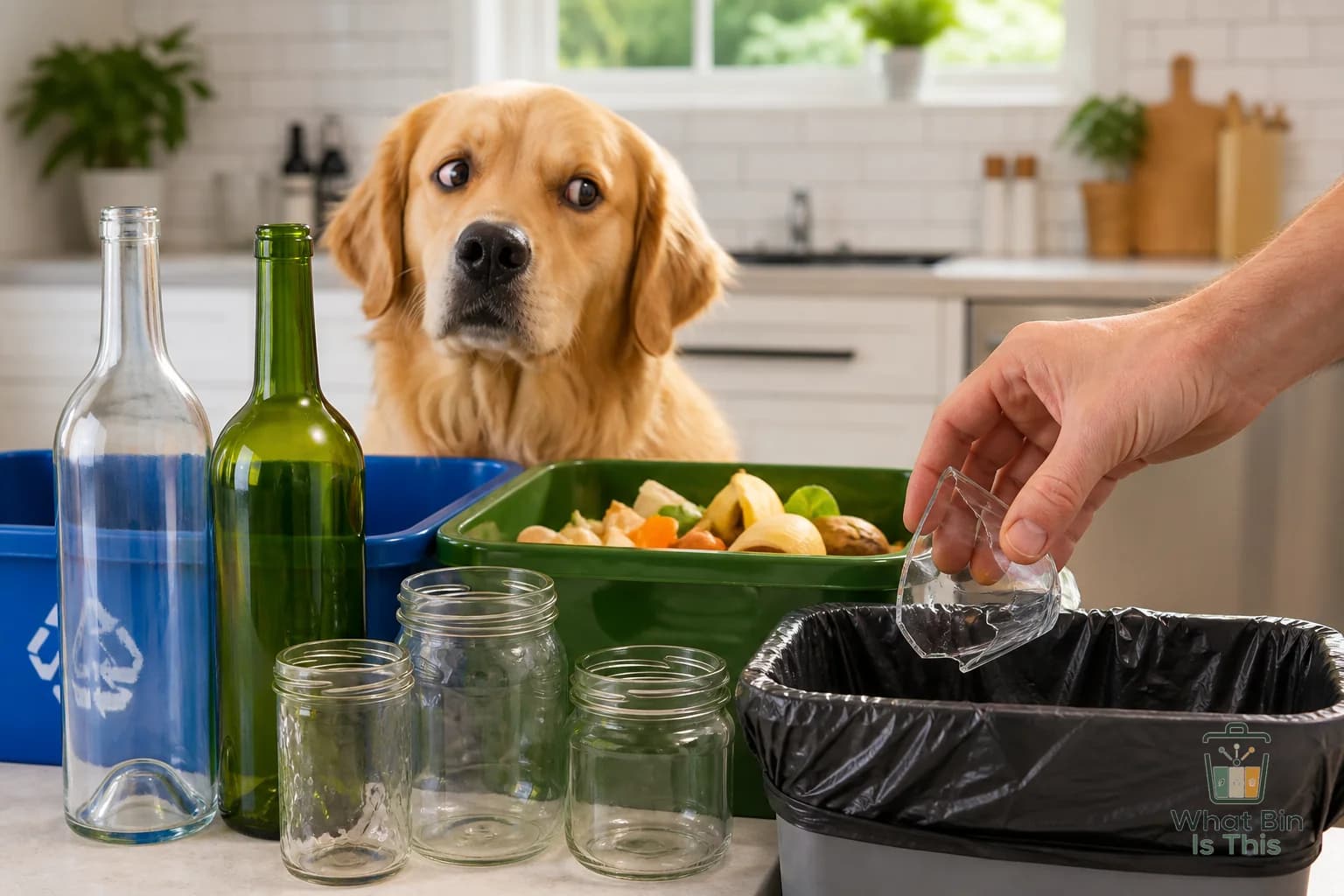
Glass looks like it should be the easiest recycling call in the house. Jar empty, bottle empty, blue bin, done. Then you find out some cities do not take glass at the curb, some want lids handled separately, and your broken drinking glass is not the same material as a pasta sauce jar.
So yes, glass jars and bottles are often recyclable. But only the right kind of glass, handled the right way, in a program that actually accepts it.
Direct answer
Put glass food jars and beverage bottles in recycling if your local program accepts glass containers. That usually means things like pasta sauce jars, jam jars, pickle jars, beer bottles, wine bottles, and soda bottles.
Empty them first. A quick rinse is enough if there is sticky food inside. They do not need to be dishwasher clean. The goal is to keep food residue from turning the bin into a gross science project.
Lids are the annoying part. Metal lids from jars may be recyclable in many programs, but small loose lids can fall through sorting equipment. Some places want metal lids placed back on the empty jar. Others want them loose, nested inside a metal can, or in the trash. Plastic caps and lids vary even more. If your city gives a specific lid instruction, follow that over any general rule.
Simple checklist:
- Empty the jar or bottle.
- Give sticky containers a quick rinse.
- Check whether your curbside program accepts glass.
- Follow local instructions for lids and caps.
- Keep broken glass, drinking glasses, ceramics, mirrors, and window glass out of the recycling bin.
If your local program does not accept glass at the curb, look for a glass drop off site or put it in the trash according to local guidance.
Why the answer is not obvious
People hear glass and think one material. Recycling systems do not see it that way.
Food jars and beverage bottles are container glass. They are made to be recycled with other containers when a program has a market and sorting setup for them. Drinking glasses, ovenware, mirrors, light bulbs, ceramic mugs, and window glass can have different melting points, coatings, or additives. They can contaminate a load of recyclable container glass.
That is why an empty salsa jar may be fine, while a cracked tumbler from your kitchen cabinet is not. Same shelf, different disposal answer.
There is also the local economics problem. Glass is heavy, breaks easily in trucks, and can be expensive to transport. Some cities accept it curbside. Some accept it only at drop off locations. Some do not accept it for recycling at all. That is not a moral puzzle. It is a local sorting and hauling puzzle.
For a related glass trap, see Can drinking glasses go in the recycling bin?.
Common mistakes
The first mistake is wishcycling every shiny glass object. Wine bottle, yes if accepted. Broken mirror, no. Candle jar with wax and a glued in wick tab, usually not until cleaned enough and accepted locally. Ceramic coffee mug, no. Pyrex or oven safe glass, no for curbside recycling in most places.
The second mistake is bagging glass recyclables. Do not put jars and bottles inside a plastic trash bag before placing them in recycling unless your local program specifically says to. Bagged recyclables may be treated as trash because workers and machines cannot easily verify what is inside.
The third mistake is leaving lots of food or liquid inside. A few drops are not a crisis. Half a jar of pickle juice, old sauce, or beer is not helping anyone. Empty first, rinse if needed, then recycle.
The fourth mistake is assuming broken container glass still belongs in the bin. Even if the original item was recyclable, broken glass can injure workers and create sorting problems. Many programs tell residents to wrap broken glass, label it if required, and put it in the trash. Check your local instructions before handling it.
The fifth mistake is treating the recycling symbol as permission. The symbol does not mean your city accepts that item. It only tells part of the material story. Local rules decide the actual bin.
If you want the broader sorting rule, read What counts as recycling contamination?.
Local-rule caveat
Glass rules are more local than people expect. Your city may accept clear, brown, and green glass together. It may ask you to separate glass by color at a drop off site. It may exclude glass from curbside bins entirely. Apartment buildings can also have different instructions than single family curbside service.
Before you toss, check your city, hauler, or transfer station guidance for three things:
- Does curbside recycling accept glass jars and bottles?
- Are caps and lids supposed to stay on or come off?
- What should you do with broken glass?
If the official guidance says no glass in the cart, do not sneak it in. A jar in the wrong system is not getting magically recycled because it had good intentions.
Practical takeaway
Recycle clean, empty glass jars and bottles only when your local program accepts container glass. Keep other glass items out: drinking glasses, ceramics, mirrors, windows, light bulbs, and broken glass are different disposal calls.
When in doubt, sort by item, not by vibe. A pasta sauce jar and a wine glass may both be glass, but the recycling bin does not treat them like twins.
Need a fast answer for the thing in your hand? Search it at What Bin Is This.