July 28, 2026
Can compostable packaging go in curbside compost?
Compostable cups, bags, plates, and takeout containers only go in curbside compost if your local program accepts them. When in doubt, keep them out.
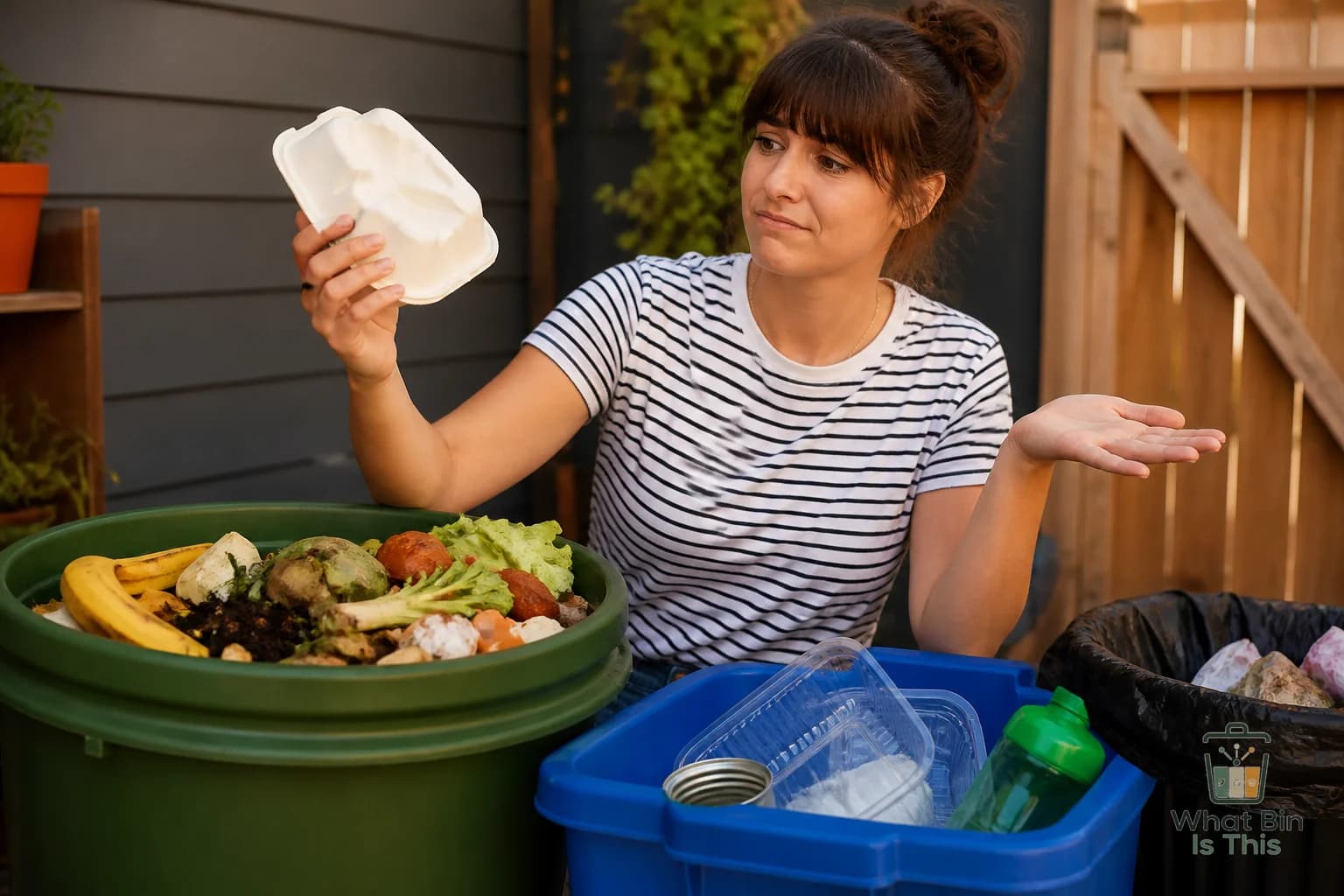
Compostable packaging feels like it should be the easy one. It says compostable right on the cup, fork, bowl, wrapper, or takeout container. Green leaf icon. Earthy font. Maybe even the word “plant based.”
Then you stand over the kitchen bin and realize the label did not answer the actual household question: does this go in *your* curbside compost cart?
Often, no.
Direct answer
Compostable packaging should only go in curbside compost if your local compost program specifically accepts that type of packaging.
If your city, hauler, or building says food scraps only, put compostable packaging in the trash. If your program accepts certified compostable products, follow its rules on which items are allowed. Some accept compostable food service ware. Some accept compostable bags only. Some accept none of it.
The safest default is:
- Food scraps: compost if your program accepts food waste
- Yard waste: compost if your program accepts it
- Compostable packaging: compost only if your program says yes
- Unknown compostable item: trash
That last one feels wasteful, but it is usually better than turning the compost cart into a mystery bin.
Why the answer is not obvious
“Compostable” sounds like a disposal instruction, but it is really a product claim. It usually means the item is designed to break down under certain composting conditions. Those conditions may require an industrial composting facility with controlled heat, moisture, oxygen, and processing time.
Your backyard pile is not that. Many curbside programs are not that either.
A compostable cup might need a facility that accepts food service packaging and can process it properly. A local compost site handling mostly leaves, grass, and food scraps may not want cups, forks, bowls, or wrappers mixed in. They can look too much like regular plastic, break down too slowly for that system, or create sorting problems.
The label also does not know your city. Packaging is sold nationally. Compost programs are local. That gap is where most of the confusion lives.
A compostable takeout container may be accepted in one town and treated as contamination in the next. If you are also sorting regular takeout containers, this guide may help: Trash or recycling: takeout containers.
Common mistakes
Tossing anything labeled compostable into the green bin
This is the big one. Compostable does not mean universally accepted. Your local program decides what belongs in the cart.
Look for plain instructions from your city or hauler, not just packaging language. If the local list says “food scraps only,” that compostable spoon is trash.
Treating plant based plastic like food waste
Plant based plastic can still behave like plastic in a compost stream that is not built for it. It may need industrial composting conditions. It may also be hard for workers or equipment to tell apart from regular plastic.
If your program says no compostable plastics, believe it.
Putting compostable packaging in recycling
Most compostable packaging does not belong in curbside recycling.
A compostable plastic cup is not the same as a regular recyclable plastic bottle or tub. Compostable fibers may also be coated, food soaked, or too low value for the recycling stream. If the item is labeled compostable and your compost program does not accept it, trash is often the correct bin.
This is one of those annoying cases where the greener looking item can be worse in the wrong bin.
Assuming certified means accepted
Certifications can matter, especially for programs that require certified compostable products. But certification is not a universal ticket into curbside compost.
Some local programs say yes only to specific certified bags. Others say no to all compostable packaging, certified or not. The local acceptance list wins.
Using compostable bags without checking the bag rule
Compostable bags are their own little drama.
Some curbside compost programs allow them because they help keep carts cleaner. Some ban all bags. Some allow paper bags but not compostable plastic bags. Some require a specific certification mark.
Do not assume the liner is allowed just because the scraps inside are allowed.
Simple checklist before you bin it
Use this quick check when you are holding a compostable cup, bowl, plate, wrapper, fork, or bag:
- Does your local compost program accept compostable packaging?
- Does it accept this type of item, not just food scraps?
- If it is compostable plastic, does the program specifically allow compostable plastics?
- If it is a bag, does the program allow compostable liners?
- Is the item mostly empty of liquids and loose food?
- If you cannot confirm acceptance, are you willing to put it in trash instead?
If you answered no or “I have no idea” to the local acceptance questions, trash is the cleaner call.
Local rule caveat
Curbside compost rules are not standardized. They depend on the processor, equipment, contracts, local contamination limits, and what the finished compost is used for.
That means two households can buy the same compostable bowl and have two different correct answers.
Check your city, county, building, or hauler instructions for exact wording. Useful phrases to look for include:
- “Food scraps only”
- “No compostable plastics”
- “No packaging”
- “Certified compostable bags accepted”
- “Compostable food service ware accepted”
- “BPI certified products accepted”
If the instructions only mention food and yard waste, do not sneak packaging in because the label looks friendly.
And if you are tempted to recycle it instead, pause. Wrong bin confidence is how contamination happens. For the broader sorting problem, see What counts as recycling contamination?.
Practical takeaway
Compostable packaging is not automatically compostable in your curbside bin.
The practical rule is simple: local program says yes, compost it. Local program says no or does not mention it, trash it. Do not recycle it unless your local recycling program specifically lists that item, which is uncommon for most compostable packaging.
It is not a moral test. It is a sorting problem. The goal is to keep food scraps and yard waste moving through the system your area actually has, not the one the cup label wishes existed.
If you are stuck between two bins, check the item in What Bin Is This before you toss it.