
August 2, 2026
Weekly Review: Pizza Boxes, Propane Tanks, and the Stuff That Tricks the Bin
Greasy cardboard, old batteries, propane tanks, plastic utensils, and other household disposal traps from this week.
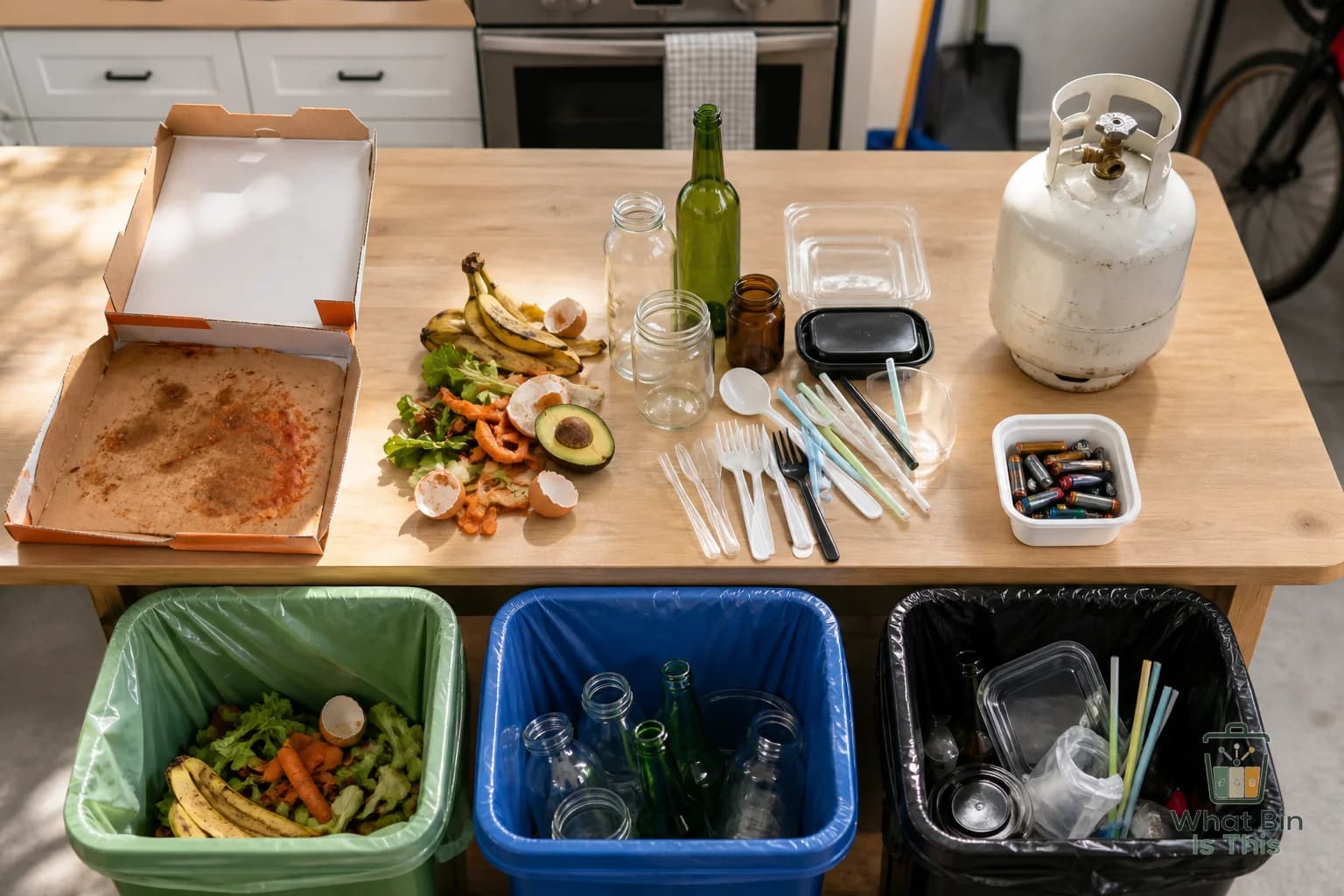
This weekly review is about the stuff that tricks the bin: familiar household items that look obvious until grease, pressure, size, or local rules change the answer.
Item of the Week
Pizza boxes are the classic recycling argument because everyone is partly right.
Yes, they are cardboard. No, that does not mean the whole box automatically belongs in recycling. Clean cardboard is usually fine. Grease soaked cardboard, stuck cheese, crusts, sauce cups, and wax paper are not doing your recycling bin any favors.
The better move is boring but effective: tear the box apart. Recycle the clean lid and clean side panels. Put the greasy bottom in the trash, or compost it only if your local compost program accepts greasy paper.
Read the full guide: Can you recycle pizza boxes?
Featured Guide
Batteries deserve more respect than the junk drawer gives them.
Loose batteries do not belong in curbside recycling. Rechargeable, lithium, button, and damaged batteries can create fire risk when they are crushed, punctured, or sorted with normal recyclables. Even if a battery looks dead, it may still have enough charge to cause trouble.
For household cleanup, separate batteries by type. Tape the terminals on lithium and rechargeable batteries when storing them for drop off. Keep swollen or damaged batteries away from heat and do not toss them in with regular trash.
Guide to keep handy: Can batteries go in the trash?
Recycling Fact
An item being made of metal or plastic does not mean it belongs in curbside recycling.
This came up twice this week: propane tanks and plastic utensils. Propane tanks can still hold pressure or residue even when they feel empty, so they usually need a refill, exchange, retailer, or household hazardous waste route. Plastic utensils are the opposite problem: they are too small, too lightweight, and too awkward for many sorting systems.
Different reason, same answer: keep both out of the curbside recycling bin unless your local program clearly says otherwise.
Useful reads:
- Can empty propane tanks go in the trash?
- Can you recycle plastic utensils?
- Can you recycle aluminum foil?
What's New
New disposal guides from this weekly review:
- Can you recycle pizza boxes? Clean cardboard can usually be recycled. Greasy, cheesy, food soaked sections usually cannot.
- Can empty propane tanks go in the trash? Empty is not the same as safe for the trash truck.
- Can you recycle plastic utensils? Most plastic forks, knives, and spoons are trash unless your local program says yes.
- Can you recycle glass jars and bottles? Container glass is often recyclable, but drinking glasses, mirrors, and broken glass are different.
- Can compostable packaging go in curbside compost? Compostable packaging only belongs in curbside compost if the program accepts it.
- Can batteries go in the trash? Keep loose batteries out of curbside recycling, and handle lithium and rechargeable batteries with care.
Check the right bin before you throw it away: What Bin Is This
Question of the Week
I am cleaning out the garage. How do I avoid making one giant mystery pile?
Start by sorting the risky stuff first. Pull out batteries, electronics, propane tanks, paint, pesticides, motor oil, and anything with a warning label. Those are not normal trash decisions, and they should not be buried under cardboard and broken garden tools.
Then sort the ordinary stuff:
- Clean cardboard boxes: usually recycling
- Dirty cardboard, greasy food boxes, and mixed trash: usually trash
- Electronics: look for an electronics recycling drop off
- Foam packaging: only recyclable where a specific foam drop off exists
- Plastic bags and film: usually store drop off, not curbside recycling
- Scrap metal: sometimes accepted at scrap yards, not always curbside
The trick is resisting the one-bin cleanup. Garage cleanouts usually need three paths: normal trash, normal recycling, and a drop off pile for the weird stuff.